

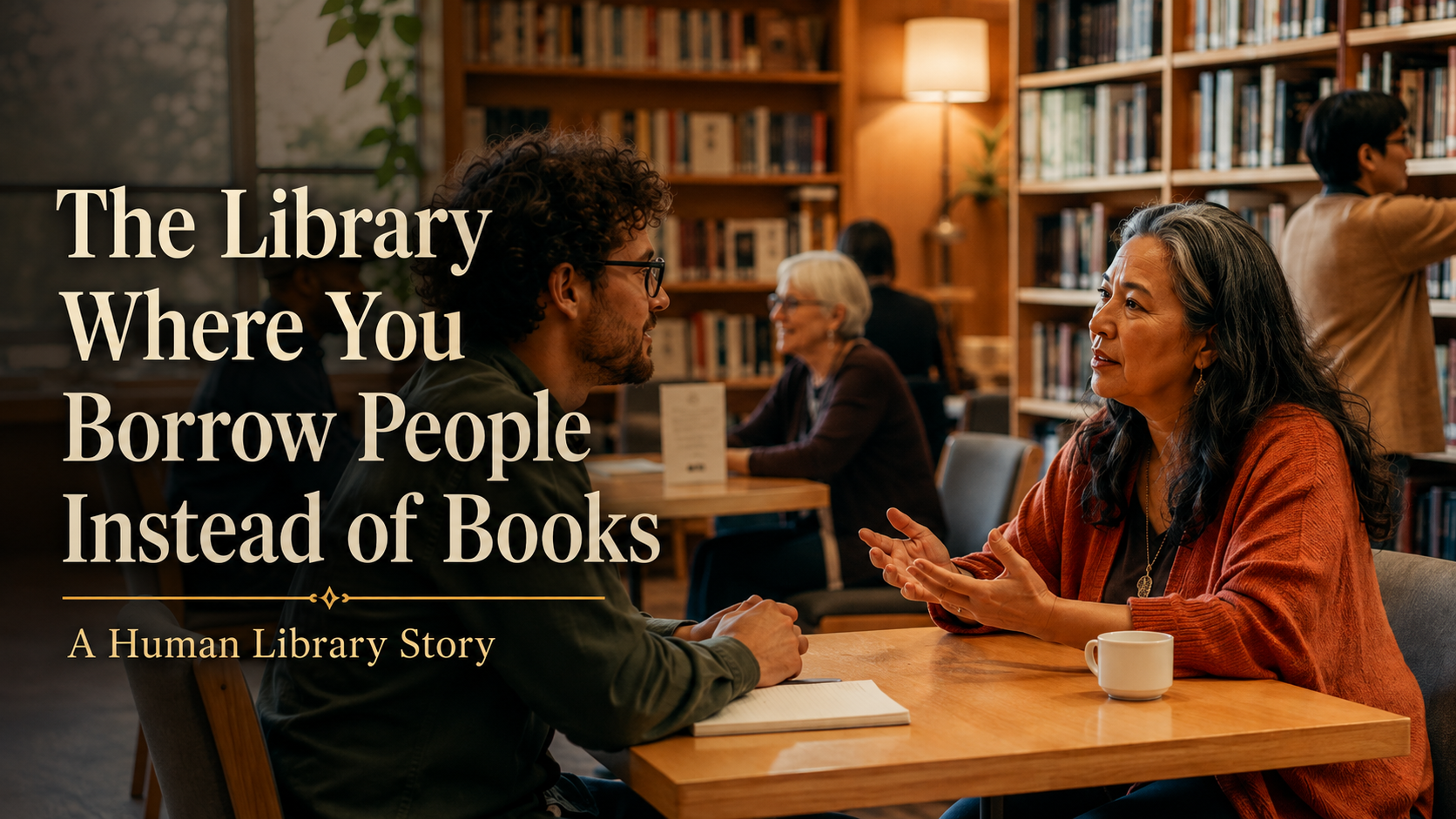
The Library Where You Borrow People Instead of Books
Imagine walking into a library and instead of borrowing a book, you borrow a person.
It may sound like the plot of a novel, but this unusual idea has become a reality in several countries around the world through a project known as the Human Library.
The concept is simple but powerful. Instead of reading about someone’s experiences, visitors have the opportunity to sit down and talk directly with people from different backgrounds, professions, cultures, and life experiences.
A “book” in the Human Library might be a refugee, a former prisoner, a military veteran, a person living with a disability, or someone who has overcome extraordinary challenges. Visitors can borrow these “human books” for a conversation, usually lasting between 20 and 30 minutes.
The project began in Denmark in 2000 as a way to challenge prejudice and encourage understanding between people who might never otherwise meet.
Organizers believed that many stereotypes survive because people rarely have the opportunity to ask honest questions and hear real stories directly from those affected.
The result was something surprisingly effective.
Instead of relying on assumptions, participants could engage in open conversations and learn from personal experiences.
Many visitors arrive with curiosity and leave with a completely different perspective.
One participant described the experience as “reading a book that talks back.”
Another said it helped them understand a life they had previously known very little about.
Over the years, Human Library events have spread across Europe, North America, Asia, Africa, and Australia.
Universities, schools, community centers, and libraries have hosted events designed to bring people together through dialogue rather than division.
The success of the project demonstrates the power of storytelling.
While books remain one of humanity’s greatest tools for learning, direct conversations can sometimes create an even deeper connection.
In a world increasingly shaped by online interactions, the Human Library reminds us of the value of face-to-face communication.
It encourages people to listen, learn, and see one another as individuals rather than labels.
Why It Matters
Many misunderstandings begin when people know very little about one another.
The Human Library offers a simple solution: conversation.
By creating opportunities for honest discussion, it helps build empathy, reduce prejudice, and strengthen communities.
Conclusion
The Library Where You Borrow People Instead of Books is one of the most creative educational projects in the world.
It transforms curiosity into understanding and proves that sometimes the most valuable stories are not found on shelves but in the lives of real people.
Frequently Asked Questions
Is the Human Library real?
Yes. Human Library events have been held in dozens of countries around the world.
Who can become a Human Book?
People with unique life experiences who are willing to share their stories and answer questions.
What is the purpose of the project?
To encourage understanding, challenge stereotypes, and promote meaningful conversations.

Author: Nana Araba -Sprinkle News



Well done. Misunderstanding needs to be addressed
Thanks for your comments