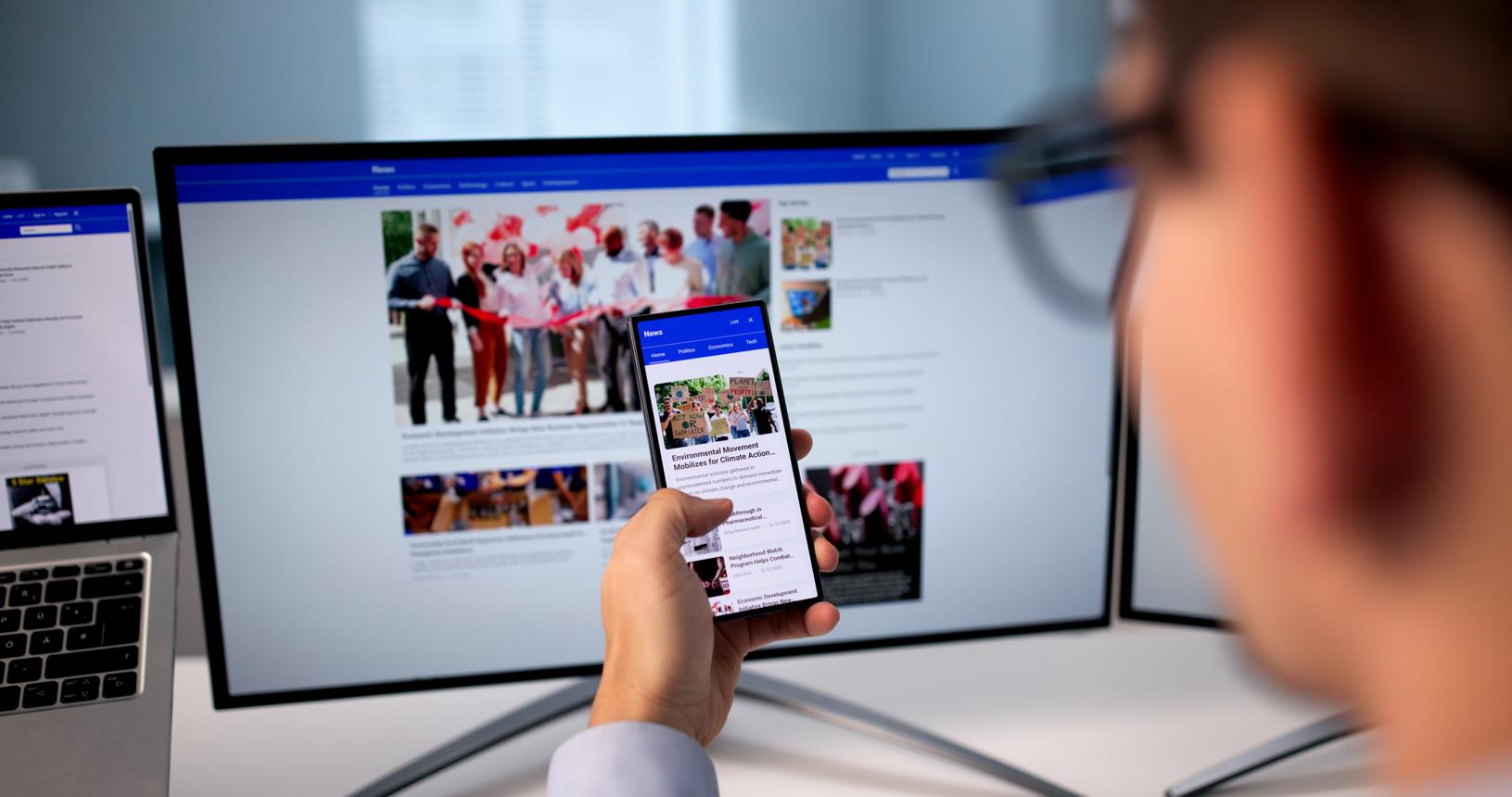
How Social Media Has Changed the Way We Consume News
By sprinklenews.com
The way people access and consume news has changed dramatically over the past two decades. Not long ago, newspapers, television broadcasts, and radio stations were the primary sources of information. Today, social media platforms have become one of the most influential channels for news distribution.
This shift has transformed not only how information is delivered but also how people engage with current events and form opinions about the world around them.
News at Our Fingertips
One of the biggest advantages of social media is speed. Information can be shared instantly with millions of people around the world. Major events, breaking news, and eyewitness accounts often appear on social media before traditional news organizations have had time to publish detailed reports.
This immediacy has made it easier for people to stay informed about developments as they happen.
Increased Accessibility
Social media has made news more accessible than ever before. People no longer need to purchase newspapers or wait for scheduled broadcasts. With a smartphone and internet connection, users can access information from virtually anywhere.
This convenience has helped more people engage with news and current affairs on a daily basis.
The Rise of Citizen Journalism
Ordinary individuals can now report events directly from the scene using photos, videos, and live streams. This form of citizen journalism has played an important role in highlighting stories that might otherwise go unnoticed.
In many cases, eyewitness content has provided valuable perspectives during natural disasters, public demonstrations, and other major events.
The Challenge of Misinformation
While social media has expanded access to information, it has also created challenges. False information can spread rapidly, sometimes reaching millions of users before corrections are issued.
This has made media literacy more important than ever. Users must learn to evaluate sources, verify claims, and distinguish between fact and opinion.
Personalised News Feeds
Social media algorithms are designed to show users content that aligns with their interests and online behaviour. While this can improve user experience, it may also create information bubbles where people are exposed primarily to viewpoints similar to their own.
As a result, individuals may miss alternative perspectives that are important for understanding complex issues.
Changing Attention Spans
The popularity of short-form content has influenced how news is consumed. Headlines, clips, and summaries often receive more attention than detailed reports.
Although this makes information easier to digest, it can sometimes oversimplify important issues and reduce opportunities for deeper understanding.
Opportunities for News Organisations
Traditional media companies have adapted by embracing digital platforms. Many news organisations now use social media to reach larger audiences, engage directly with readers, and distribute content more efficiently.
Social media has become an essential tool for modern journalism.
Looking Ahead
The relationship between social media and news will continue to evolve as technology advances. Artificial intelligence, personalised content, and emerging platforms are likely to further influence how information is shared and consumed.
The challenge for both media organisations and audiences will be balancing speed and convenience with accuracy and responsible reporting.
Conclusion
Social media has fundamentally changed the way people consume news. It has increased accessibility, accelerated the spread of information, and given individuals a greater role in reporting events. However, it has also introduced challenges related to misinformation, bias, and information overload.
As news consumption continues to evolve, critical thinking and media literacy will remain essential skills for navigating the digital information landscape.