

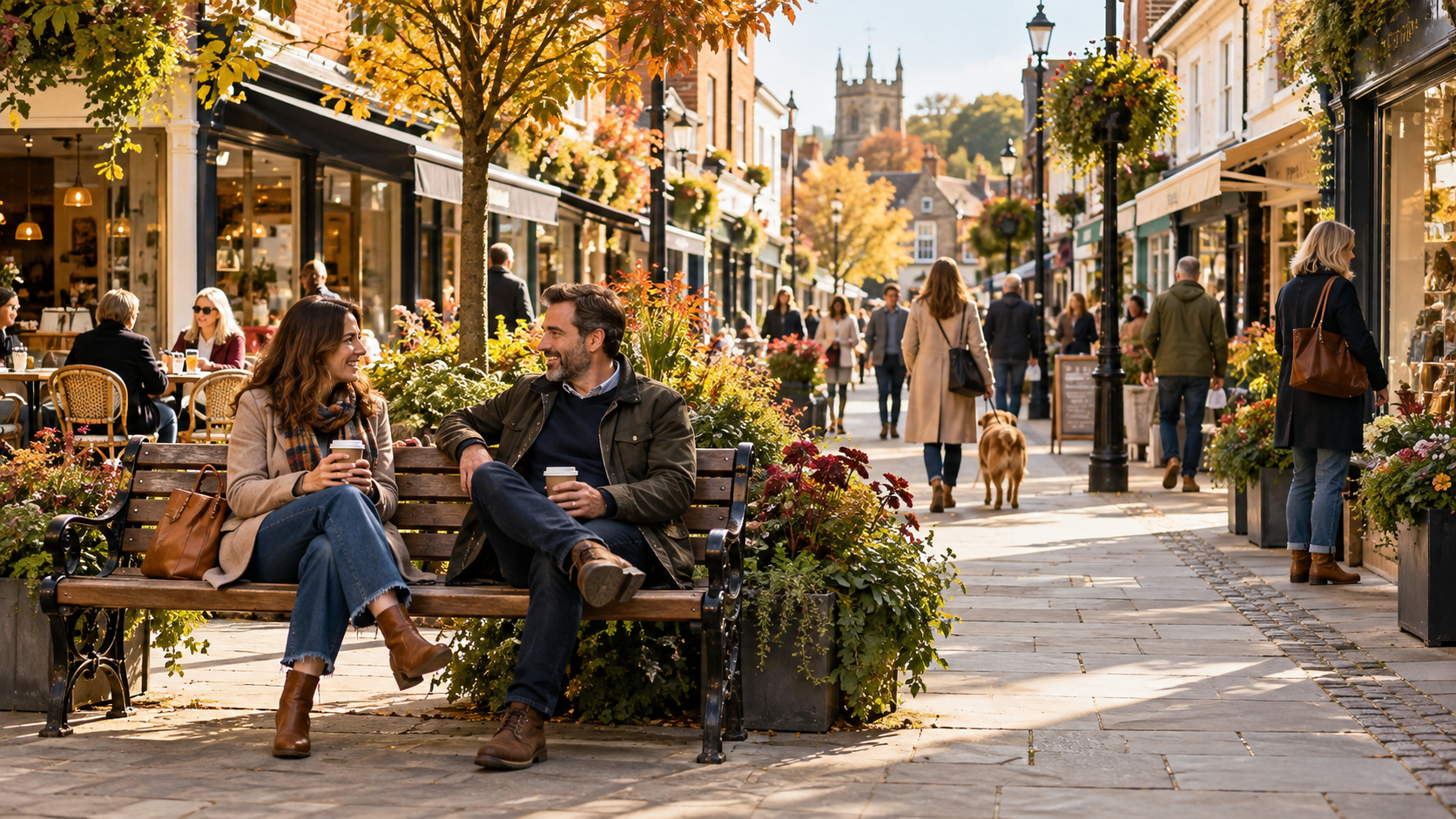
A British High Street Should Give People a Reason to Stay
A person arrives in town to collect a parcel, buy a loaf of bread and pick up a birthday card. Within half an hour, the errands are finished. They could go straight home—or stay, browse another shop, have something to eat and meet a friend.
What makes the difference?
Part of the answer lies in the shops themselves. But it also lies in the street around them: whether there is somewhere to sit, whether walking feels comfortable and whether the place offers anything beyond a series of transactions.
When we discuss the future of Britain’s high streets, we should ask what makes people want to spend time there. A town centre can be useful without being enjoyable. The ambition should be to make it both.
The experience begins before the shop door
A visit to a high street starts before anyone makes a purchase.
For one person, it begins at a bus stop. For another, it starts in a car park, followed by a walk through an unfamiliar passage. Someone else may arrive on foot with a child, a pushchair or shopping bags already in hand.
These different journeys affect how people experience the same place.
A visitor who can find a clear route, understand the signs and move comfortably along the pavement has a better starting point than someone who arrives confused or struggling with obstacles.
Shop windows may be attractive, but people still need to reach them. A welcoming town centre should pay attention to the whole visit, from arrival to departure.
Somewhere to sit is part of everyday access
Public seating can seem like a minor detail until you need it.
An older shopper may want a short rest between errands. A parent might need to settle a child. Someone carrying several bags may simply want a moment to rearrange them before continuing.
Without a bench or other suitable seating, their choices become limited. They can keep moving, find a business where sitting requires a purchase, or leave.
That makes seating more than decoration. It is part of how a place accommodates ordinary life.
Its position matters too. A bench beside a busy route may be useful, but it should leave enough room for others to pass. A seat exposed to every gust of wind may remain empty even when people need a rest. Thoughtful placement can matter as much as the number of benches provided.
Spending time should not always mean spending money
Cafés and restaurants can bring warmth and activity to a street. Their outdoor tables often make a town centre look inviting.
However, those tables usually come with the expectation of buying something. That is reasonable for a business, but it should not be the only way to pause in a public place.
Someone waiting for a friend should be able to sit without ordering a drink. A family bringing food from home should have somewhere appropriate to eat it. A person on a tight budget should still feel welcome in the centre of their town.
Public seating, libraries and well-maintained open spaces help make that possible.
The question is not whether every activity should be free. It is whether a high street allows people with different budgets to belong there.
Give people more than one reason to visit
Shopping may bring someone into town, but another activity can make the journey feel more worthwhile.
Consider a visit that combines a library stop, a browse in a bookshop and lunch with a friend. Or a Saturday morning that includes a small community exhibition followed by grocery shopping.
These are hypothetical examples, but they show how different uses can support a fuller experience.
A town centre does not need to become an entertainment venue every day. It can simply make room for a variety of ordinary activities: reading, meeting, learning, browsing and resting.
Community events can contribute, provided they suit the space and remain accessible. A modest local display may be more useful than a large event that makes routine access difficult.
Notice what makes people leave
It is easy to ask what might attract visitors. It is equally useful to ask what cuts a visit short.
Perhaps the toilets are difficult to find. Maybe the pavement becomes awkward near a particular corner. A person may feel comfortable during the day but hesitate to return after dark.
These issues deserve specific investigation. The most useful answers may come from observing how people move and listening to those who use the street regularly.
Shopkeepers can explain where customers struggle to find them. Residents can identify routes they avoid. People with mobility needs can point out difficulties that others may overlook.
Consultation works best when it leads to visible decisions. Asking for opinions without explaining what happens next can leave people feeling that participation changes little.
Small improvements need maintenance
An improvement has lasting value only if it continues to work.
A planter needs care. A sign needs to remain readable. A bench needs cleaning and repairs. A walking route must stay clear after it has been redesigned.
This makes maintenance part of the original decision, rather than an afterthought.
Before adding a new feature, it is sensible to ask who will look after it, how much that will cost and whether it solves a real problem. A simple, durable addition may serve the street better than something impressive that quickly becomes neglected.
Judge success through everyday use
There is no single design that will suit every British high street. A small market town has different needs from a busy city shopping district. Local businesses also face challenges that public seating and attractive pavements cannot resolve on their own.
Yet the experience of being there belongs in every discussion.
Can people reach the places they need? Can they rest? Do they understand where to go? Is there a reason to return even when they do not have a shopping list?
A high street becomes more valuable when a necessary trip turns into an enjoyable part of the day. Someone finishes an errand, notices a welcoming place to pause and decides to stay a little longer.
That decision is worth designing for.

