

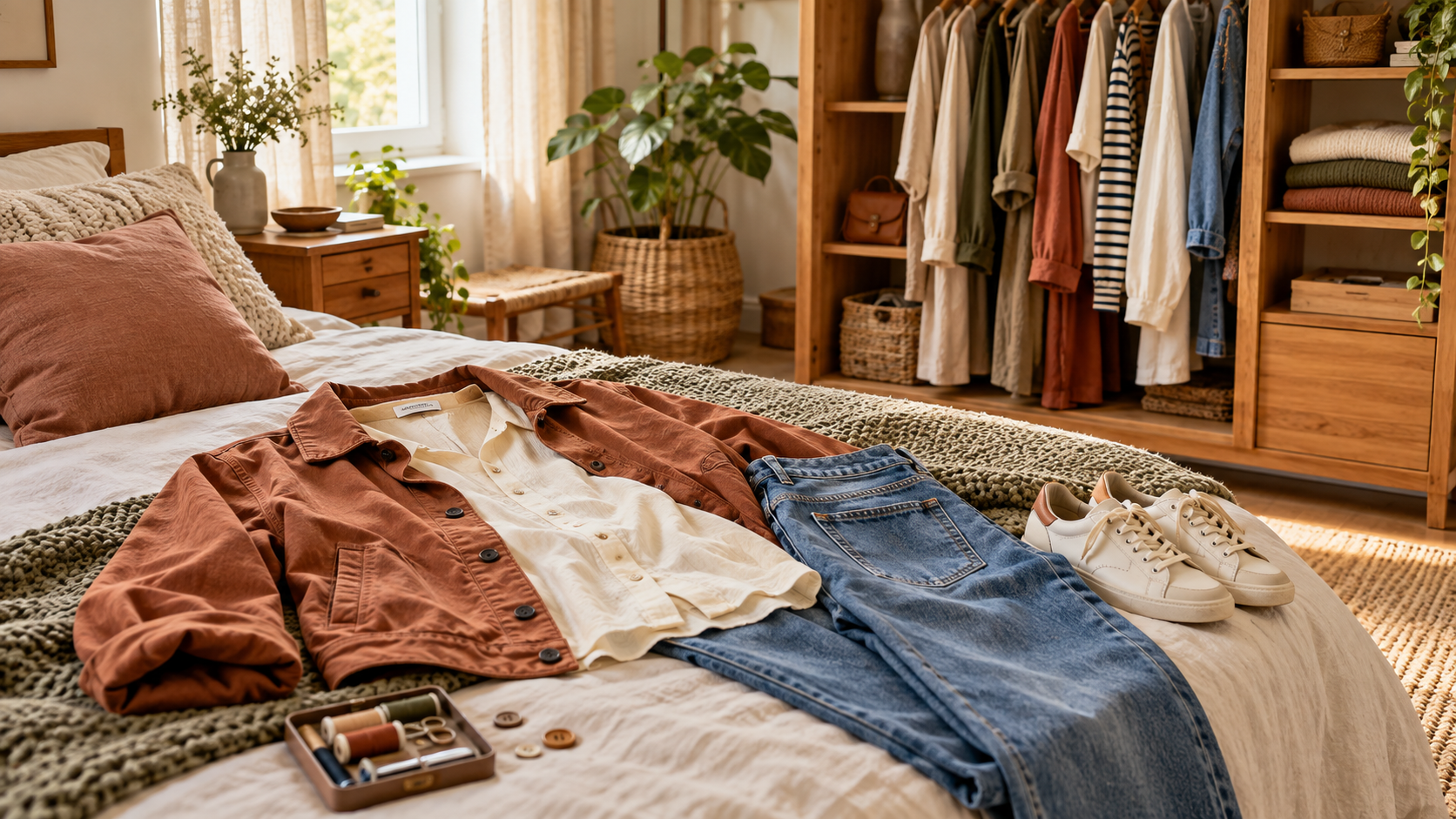
Before You Buy Another Outfit, Look Again at the Clothes You Own
The invitation arrives, and suddenly the wardrobe seems to contain nothing suitable.
There are clothes on the hangers and folded items in the drawers. Some are familiar favourites. Others have barely been worn. Yet the first response is often to open a shopping app and search for something new.
A new purchase may be the right choice. But before making it, there is another possibility: spend a little time finding out what your existing clothes can do.
Looking again at a wardrobe is more useful than simply telling yourself to buy less. It can reveal combinations you have overlooked, small problems that are keeping good pieces unworn and genuine gaps that deserve a thoughtful purchase.
Begin with one item
Pulling out every piece of clothing at once can turn a simple task into a tiring afternoon. Start with one item instead.
Choose something you like but rarely wear. It might be a colourful shirt, a denim jacket or trousers that always seem slightly too formal for your usual plans.
Try the item on. Clothes can look different on the body from how they appear on a hanger, and memory is not always a reliable guide to fit.
Then build two or three combinations around it.
A shirt can be worn buttoned and tucked in, left loose or worn open over a plain top. A jacket may feel more relaxed with jeans than with matching trousers. Changing the shoes can also alter the impression of an outfit.
The aim is to find a combination that suits your life and feels comfortable. An outfit that looks interesting but makes you uneasy is unlikely to become a favourite.
Ask why a garment stays unworn
Sometimes the reason is obvious. A piece no longer fits, feels uncomfortable or does not suit your taste.
Other times, the problem is smaller.
Perhaps a button is missing. The sleeves may be too long. A hem might need attention, or the garment may always be waiting to be ironed.
Naming the problem makes the next decision easier.
A simple repair could bring the item back into use. If an alteration is more complicated, ask a tailor or dressmaker what is possible and what it would cost. It is better to have that information before deciding the garment is worth keeping.
There are limits. Not every piece can be altered successfully, and not every repair will be worth the expense. The useful question is whether the change would help you wear it regularly.
Consider the life you actually lead
A wardrobe can become crowded with clothes for imagined occasions.
There may be several smart outfits for events that rarely happen, while the clothes needed for ordinary days are worn repeatedly. Someone who spends most of the week at school, work or running errands may need different pieces from someone who regularly attends formal occasions.
Think about a typical week.
What do you wear most often? Which items make getting dressed easy? What repeatedly causes difficulty?
This exercise can reveal that the wardrobe does not need more variety everywhere. It may need a few better options for the activities that occupy most of your time.
It can also help you stop judging everyday clothes against an unrealistic idea of how you ought to dress.
Make successful combinations easy to remember
When you find an outfit that works, take a quick photograph.
There is no need for a polished picture or a public post. A simple image on your phone can remind you which shirt, trousers and shoes felt right together.
Keep a small collection for different situations: an ordinary working day, a casual outing, a meal with friends or a school presentation.
This is especially useful when you are rushed. Instead of trying to invent an outfit in a few minutes, you can choose from combinations you have already tested.
The photographs may reveal patterns too. You might discover that one jacket works with several outfits, while another rarely feels right. That information can help with future buying decisions.
Give clothes appropriate care
Before treating an item as tired or finished, check whether it simply needs suitable care.
Read the care label rather than assuming every garment can be handled in the same way. Different fabrics and constructions may require different washing, drying or pressing methods.
Keep clean clothing somewhere dry and suitable. Deal with loose buttons or small seam problems when you notice them, rather than waiting until the next time you need the garment.
Good care does not guarantee that a piece will last indefinitely. However, it gives clothes a better chance of remaining comfortable and presentable.
The goal is a manageable routine, not a collection that demands more attention than you can reasonably give it.
Recognise when it is time to let something go
Looking again at your wardrobe does not mean keeping everything.
A garment may be in good condition and still be wrong for you. Perhaps it no longer fits, or you have repeatedly tried to style it without enjoying the result.
Keeping it out of guilt does not make it useful.
Depending on its condition, you could consider selling it, giving it to someone who wants it or donating it to an organisation that accepts that type of item. Check the organisation’s requirements first. Something unsuitable for wear should not automatically be placed in a donation bag.
A smaller selection of usable clothes can be easier to understand than a crowded wardrobe full of unresolved decisions.
Buy to fill a specific gap
After trying combinations and reviewing what you use, you may still need something new.
That is a clearer starting point for shopping.
Perhaps several outfits would work with one simple top. Maybe everyday shoes need replacing, or you lack a suitable outer layer.
Give the purchase a purpose. Ask whether it works with clothes you already wear, whether it feels comfortable and whether its care requirements fit your routine.
If you are buying for a particular event, consider whether you would enjoy wearing it afterwards. You do not have to demand endless uses from every item, but knowing its likely role helps you make a deliberate choice.
Fashion offers room for creativity, and that creativity can begin with familiar clothes. A different combination, a useful repair or a better fit may make an existing piece feel relevant again.
Before deciding that nothing in the wardrobe works, give it a fair chance to show you what is already there.


