

The Country That Refused to Let the Sea Win
Before coming to the Netherlands, I had heard many people say that parts of the country lie below sea level.
It sounded fascinating, but also difficult to imagine.
How could millions of people live safely in a place where the sea is higher than some of the land?
Like many people, I assumed it was simply an interesting geographical fact. I never really thought much about what it meant in everyday life.
That changed when I saw it for myself.
During one of my visits, I stayed with a friend for a few days. Her home was located in an area not far from the airport.
One morning, I woke up, walked over to the window, and looked outside.
What I saw immediately caught my attention.
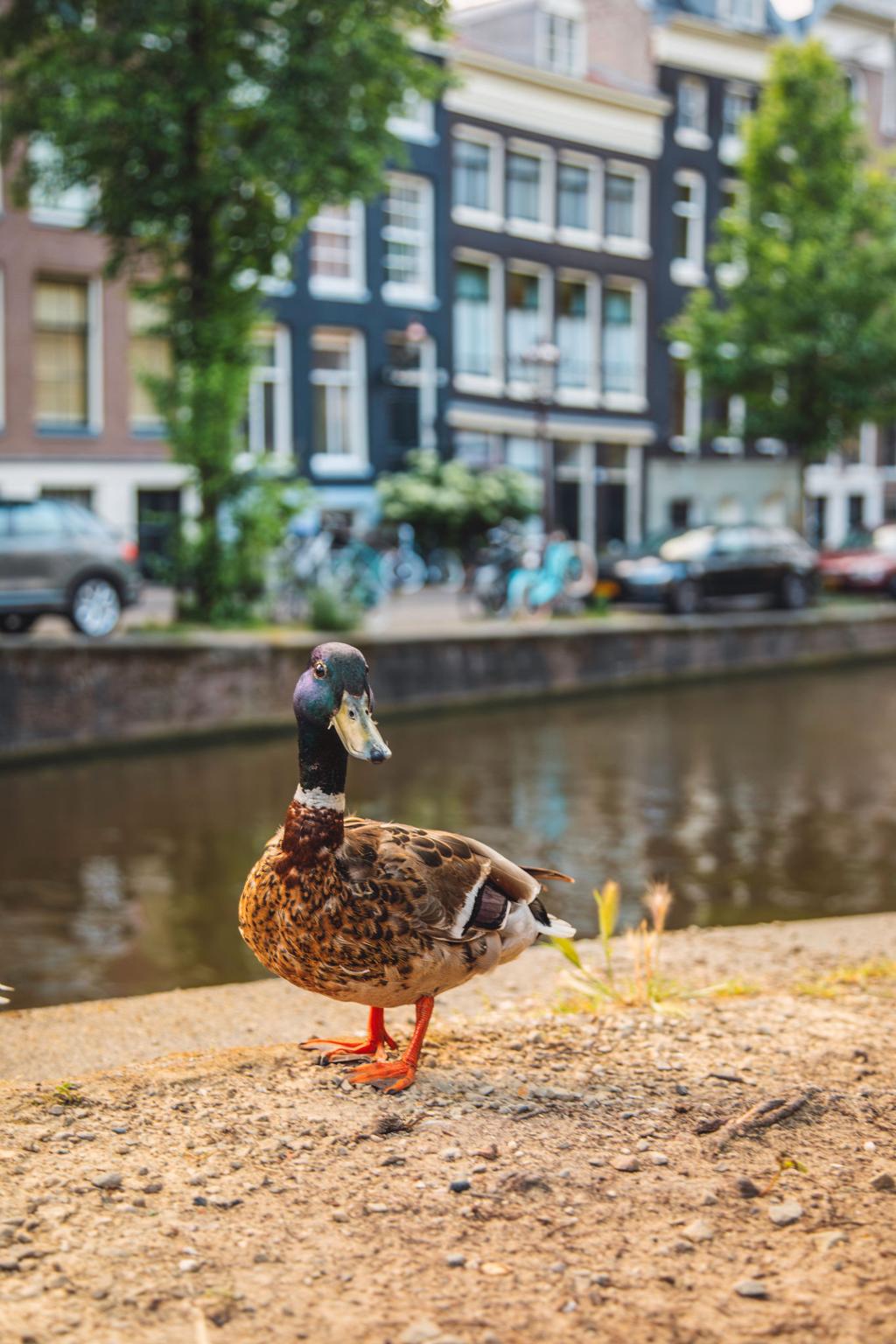
Ducks were swimming peacefully in the water below.

At first, I simply stood there watching them glide across the surface. The scene was calm and relaxing. There was something peaceful about watching the ducks move effortlessly through the water as the day began.
Then I noticed something else.
One side of the building bordered the water so closely that it almost appeared to rise directly from it. Looking around, I realised that several nearby buildings had been designed in a similar way.

For someone seeing this for the first time, it was fascinating.
Back home, houses are usually separated from rivers, lakes, or large bodies of water. Here, however, the water seemed to be part of the neighbourhood itself.
The ducks swam past the buildings as though it was the most natural thing in the world.
For local residents, it probably was.
For me, it was something I had never experienced before.
As the days passed, I found myself returning to the window again and again.
Every time I looked outside, there seemed to be something interesting to observe.
The water reflected the changing weather.
The ducks appeared and disappeared throughout the day.
People moved about their daily routines without giving much thought to the waterways surrounding them.
It was then that I began to understand something important about the Netherlands.
The Dutch do not simply live near water.
In many places, they live with it.

Water is not hidden away behind fences or treated as something separate from everyday life.
It is part of the landscape.
It is part of the community.
And in many ways, it is part of the country’s identity.
Another thing that caught my attention was the aircraft.
Because the area was close to the airport, planes regularly passed overhead.
Some flew surprisingly low as they prepared to land or shortly after taking off.
On several occasions, I could clearly see the airline names and logos on the aircraft.

I found myself looking from the water below to the sky above.
Ducks gliding peacefully through the water.
Aircraft connecting people to destinations around the world.
It was an unusual combination, yet somehow it all seemed to fit together.
Those simple moments became some of my favourite memories of the visit.
The experience also made me curious.
How had the Dutch managed to create thriving communities in places where water seemed to be everywhere?
The answer lies in centuries of determination, innovation, and cooperation.
For generations, people in the Netherlands have worked to manage water rather than retreat from it.
Through dikes, canals, pumping stations, and sophisticated water-management systems, they gradually transformed vulnerable areas into places where people could safely live and work.
It was not something that happened overnight.
It took vision.
It took planning.
And it took generations of people working together.
Today, millions of people benefit from those efforts.
What impressed me most was that none of this felt unusual while I was there.
Life simply carried on.
Children cycled to school.
People walked their dogs.
Boats moved through the waterways.
Families enjoyed their neighbourhoods.
Everything felt normal.
Yet beneath that normality lies one of the world’s most remarkable stories of human adaptation.
Many countries have faced difficult geographical challenges.
Some have deserts.
Others have mountains.
The Netherlands faced water.
Rather than accepting limitations, generations of people found ways to adapt and thrive.
As a visitor, I found that inspiring.
Sometimes we think of innovation as something that happens in laboratories or modern office buildings.
But some of the greatest innovations are the ones that quietly improve everyday life.
The ability to build safe, comfortable communities in areas surrounded by water is one such achievement.
Looking back, what I remember most is not a famous landmark or tourist attraction.
It is that simple morning view from my friend’s window.
The ducks swimming peacefully below.
The buildings standing confidently beside the water.
The aircraft passing overhead.
And the realisation that I was witnessing a way of life that had developed over centuries.
The Netherlands is often praised for its engineering achievements, and rightly so.
But behind those achievements is a human story.
It is the story of people who refused to let water determine their future.
It is the story of communities that learned to adapt, innovate, and flourish.
And for visitors like me, it is a reminder that some of the most fascinating experiences are found not in famous attractions, but in ordinary moments that reveal how people live.
That is why the Netherlands left such a lasting impression on me.
Not because it lies below sea level.
But because it found a way to turn what could have been a challenge into one of its greatest strengths.


