

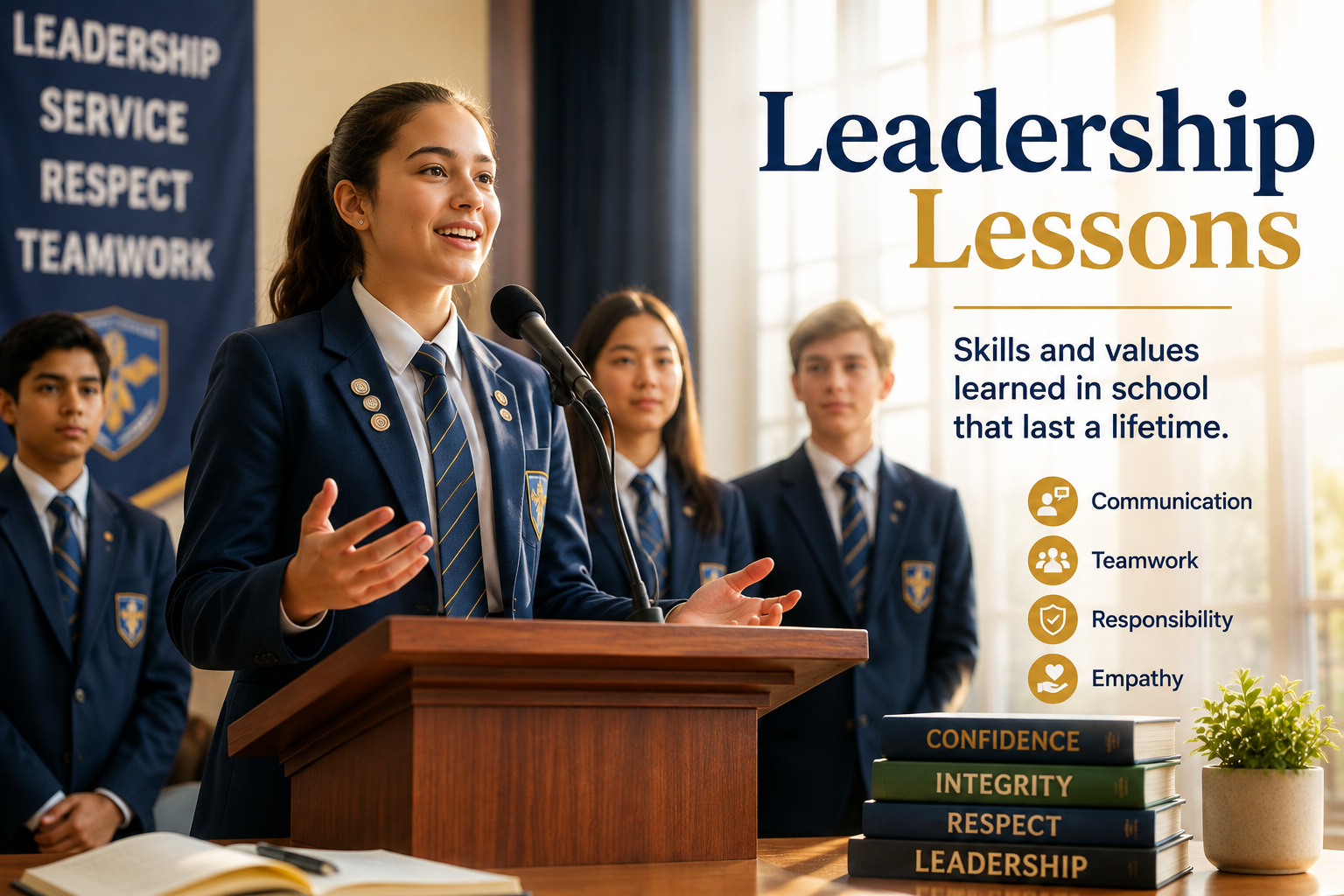
The Leadership Lessons Students May Remember Long After School
Years after leaving school, most people will forget many ordinary school days.
They may not remember what happened during a particular Monday morning lesson or what was served for lunch on an ordinary Wednesday.
But being trusted with responsibility can be different.
Standing in front of an assembly for the first time, organising an activity, representing classmates or trying to solve a disagreement can become the kind of experience a young person remembers long after graduation.
Recent reflections from student leaders in Australian schools provide an interesting reminder that some of education’s most valuable lessons happen outside examinations.
The First Time Someone Trusts You to Lead
For some students, becoming a class representative, prefect, club leader, team captain or school captain may be their first experience of being responsible for other people.
Suddenly, their decisions affect more than themselves.
They may need to speak publicly when they are nervous.
They may have to listen to complaints.
They may discover that people disagree with their ideas.
And occasionally, they have to accept that the solution they prefer is not the solution everyone else wants.
Those experiences sound surprisingly similar to challenges adults encounter in workplaces every day.
Confidence Is Usually Built, Not Given
We sometimes describe confident people as though they were simply born that way.
Yet confidence often develops because somebody was given an opportunity to do something uncomfortable and survived the experience.
The first speech may be terrifying.
The fifth becomes manageable.
Eventually, standing in front of a room no longer feels impossible.
Recent accounts from school captains in Melbourne and other parts of Victoria have highlighted increased confidence, communication and public-speaking ability among the skills students believe they developed through leadership.
The lesson extends beyond school leadership.
Young people need opportunities to practise responsibility before adulthood suddenly expects it from them.
Leadership Without a Badge
There is also a danger in teaching children that leadership belongs only to the person wearing a special badge.
A quiet student helping a struggling classmate can demonstrate leadership.
A student organising a small environmental project can lead.
Someone who notices a problem and proposes a practical solution is showing initiative.
So is the student who accepts responsibility after making a mistake.
Schools do not need to give every child a formal title.
They can, however, give many more children opportunities to take responsibility.
Preparing for More Than an Examination
Education understandably places great emphasis on academic achievement.
Qualifications can open doors.
But eventually, young people enter environments where knowing the correct answer is only part of what is expected.
They will work with difficult personalities.
They will have disagreements.
They will need to communicate ideas.
Some will manage people.
Others will manage projects, households, businesses or community organisations.
The ability to listen, cooperate, speak confidently and accept responsibility becomes valuable in almost every one of those situations.
The Lessons That Stay With Us
Perhaps the real value of student leadership is not producing future chief executives or politicians.
It is helping young people discover that their actions can influence the people around them.
A school captain may never hold another formal leadership title.
A class representative may eventually choose a career that has nothing to do with management.
That does not make the experience wasted.
Sometimes the most useful lesson a school can give a young person is simply this:
Your voice matters — but so does your ability to listen to everyone else’s.
Source acknowledgement: The inspiration for this feature came from recent Australian reporting on 2026 student leaders reflecting on communication, confidence, teamwork and service.
SprinkleNews.com


