

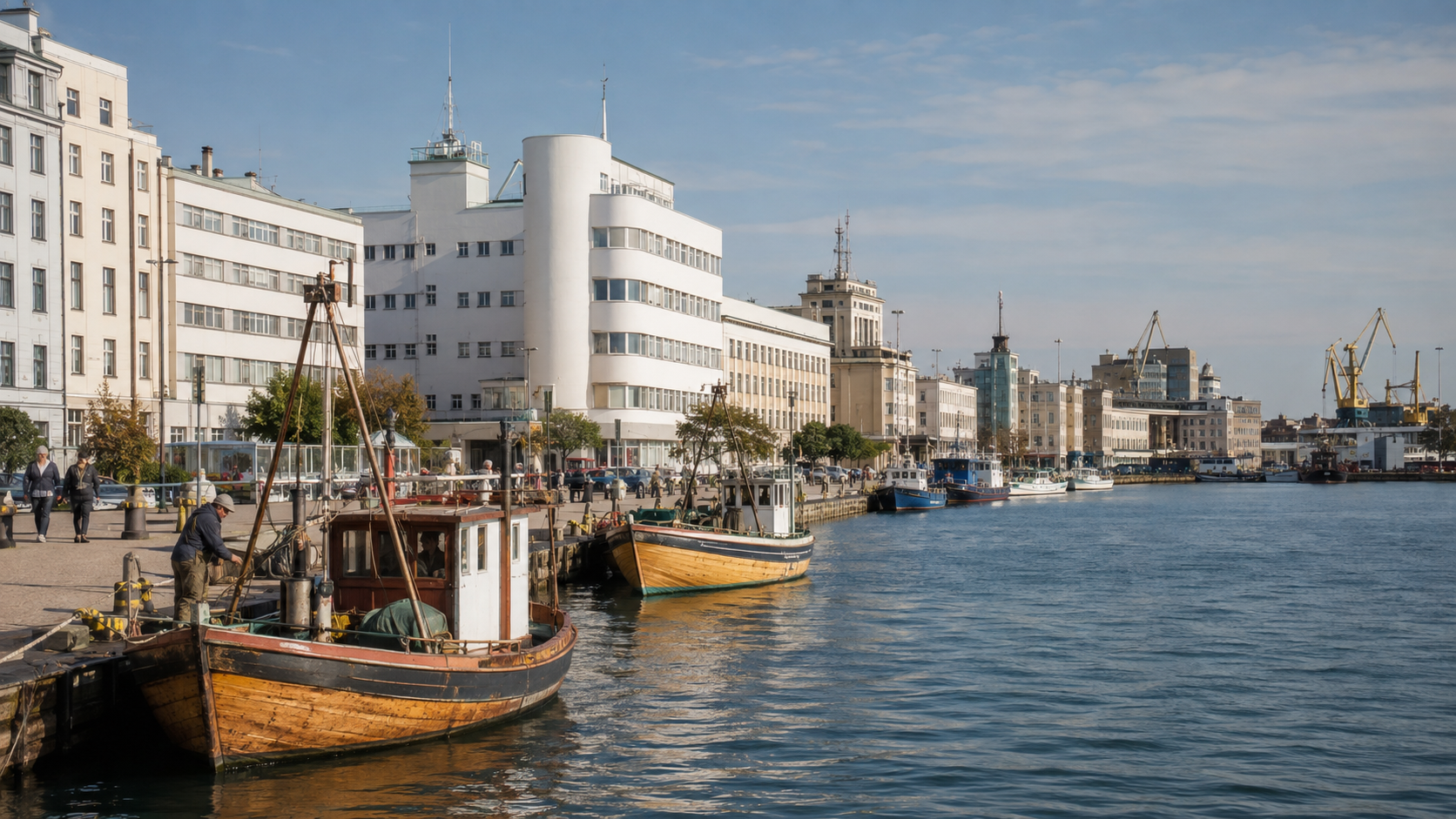
From Fishing Village to World Heritage Site: Gdynia Joins UNESCO’s List
A Polish city that grew from a small fishing village into a major Baltic port has received international recognition during the year of its 100th anniversary.
The modernist centre of Gdynia has been added to the UNESCO World Heritage List. The decision celebrates not only the city’s architecture but also one of Europe’s most remarkable stories of rapid urban development.
Unlike many historic European cities that evolved gradually over several centuries, much of Gdynia was planned and constructed within only a few decades.
A Small Village With a Much Bigger Future
In 1920, Gdynia was a fishing community with approximately 1,200 residents. Poland had recently regained its independence after more than a century of partition, and the country needed reliable access to the Baltic Sea.
Gdynia was selected for the development of a new seaport. The project soon transformed the quiet settlement into an important commercial and maritime centre.
New streets, public buildings, apartment blocks, shops and port facilities appeared as people arrived in search of employment and new opportunities. By 1939, the population had increased approximately one hundredfold.
The speed of this transformation gave planners an unusual opportunity. Instead of fitting new buildings around a medieval city centre, they could create a modern city designed for the needs and ambitions of the period.
Architecture Inspired by the Sea
Many buildings in central Gdynia were constructed in the modernist style popular between the First and Second World Wars.
The architecture is recognised by its clean lines, flat roofs, rounded corners and horizontal windows. Some buildings include curved balconies and other features resembling ships and ocean liners, reflecting the city’s close relationship with the sea.
These buildings represented optimism about technology, transport and Poland’s future as an independent country. The city itself became a symbol of national progress.
Gdynia’s architectural identity is different from that of nearby Gdańsk, which is known for its reconstructed historic centre, and Sopot, which developed as a seaside resort. Together, the three cities form Poland’s well-known Tricity metropolitan area, but each has its own character.
Recognition During a Special Anniversary
Gdynia officially received city rights in 1926. Its addition to the World Heritage List therefore comes as the city celebrates its centenary.
UNESCO recognition identifies places considered to have outstanding cultural or natural value to humanity. Gdynia now joins internationally recognised sites ranging from ancient monuments and historic city centres to exceptional natural landscapes.
The designation is likely to attract new interest from travellers, particularly those interested in architecture, maritime history and urban development.
It may also encourage greater protection of the buildings and streets that give central Gdynia its distinctive appearance.
A Young City With a Historic Story
Gdynia challenges the idea that a place must be ancient to possess important heritage. Compared with many UNESCO-listed European cities, it is remarkably young.
Its significance comes from the speed and purpose with which it was created. Within one generation, a fishing village became Poland’s gateway to the world.
The city’s buildings preserve the hopes of a country rebuilding its identity and looking towards the future. One hundred years later, the same modernist streets have earned Gdynia a place among the world’s recognised cultural treasures.
Source acknowledgement: This original SprinkleNews.com feature is based on reporting published by Reuters on 27 July 2026. World Heritage recognition can be verified through the official UNESCO World Heritage List.


