

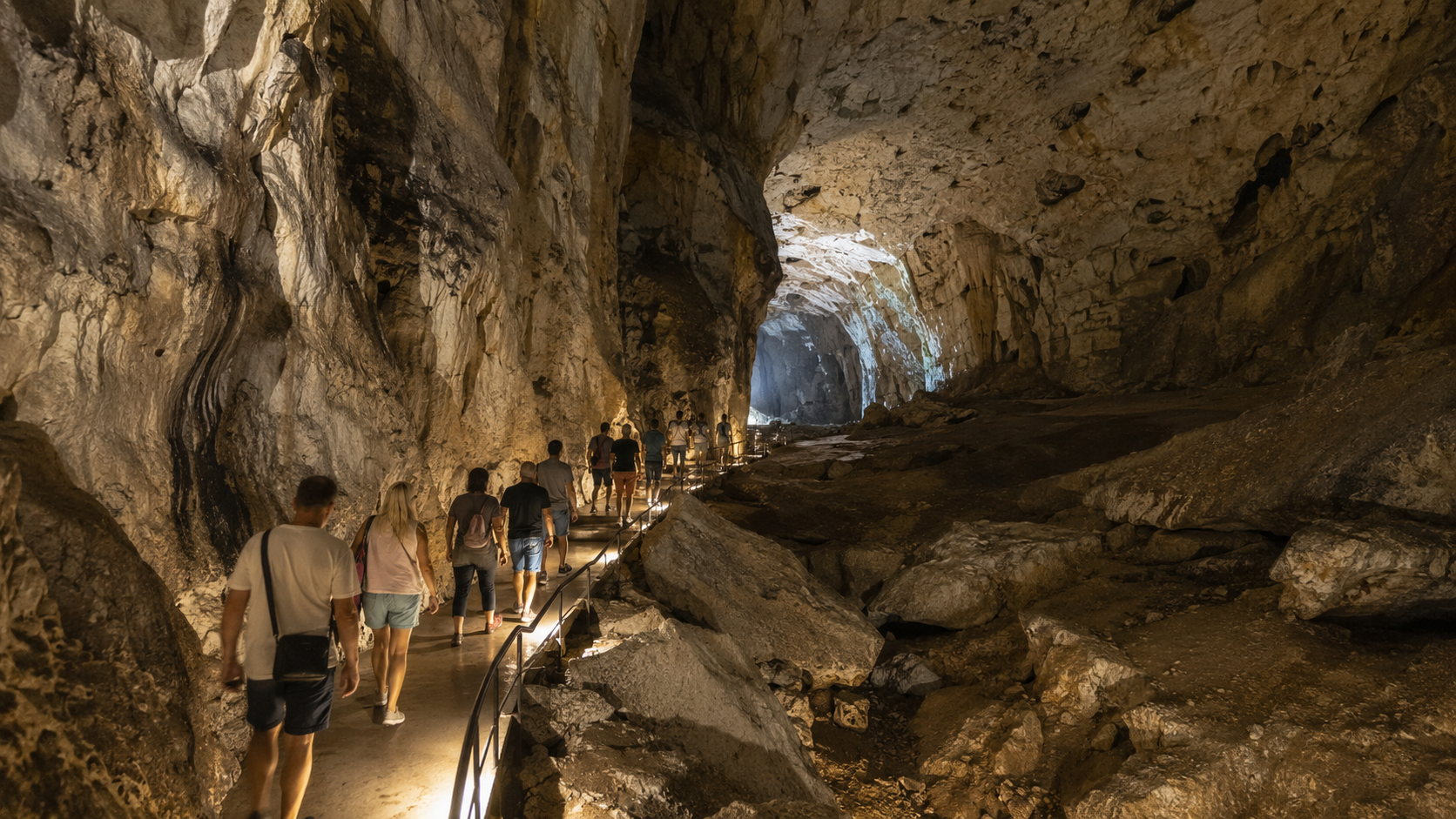
Tourists Escape Europe’s Intense Heat Inside Bosnia’s “Wind Cave”
While many European destinations are searching for ways to protect visitors from soaring summer temperatures, tourists in southern Bosnia and Herzegovina have discovered a natural refuge beneath the ground.
Vjetrenica Cave, whose name means “wind cave,” maintains a temperature of approximately 11°C throughout the year. This has made it especially attractive during the current heatwave, with outdoor temperatures in southern Bosnia reaching around 40°C.
Located in the municipality of Ravno, about 25 kilometres north of Dubrovnik, Croatia, the cave is already known for its long corridors, spacious chambers and unusual underground wildlife. The extreme summer weather has now given visitors another reason to explore it.
A Natural Escape From the Heat
Entering Vjetrenica offers a dramatic change in temperature. Visitors move from the intense summer heat into a cool underground environment that feels like natural air conditioning.
The contrast is one reason the cave receives many of its visitors during the summer. According to the public institution responsible for managing Vjetrenica, more than half of the approximately 21,000 people who visited last year arrived during the summer months.
The attraction is particularly accessible to tourists staying around Dubrovnik, one of the Adriatic region’s busiest holiday destinations.
However, entry is controlled. Groups are limited to a maximum of 80 visitors at a time because the underground environment is sensitive and must be protected.
More Than a Cool Tourist Attraction
Vjetrenica is not simply a place to escape uncomfortable temperatures. It is one of the world’s important underground ecosystems.
Hundreds of organisms have been found inside the cave. Its most famous resident is the European blind cave salamander, scientifically known as Proteus anguinus. This unusual aquatic animal lives entirely underground and may survive for as long as 100 years.
The cave contains approximately 7.5 kilometres of known passages, although visitors are only allowed into designated areas. Its dark corridors and underground chambers have also inspired local legends, including stories about fairies dancing beneath the landscape towards the Adriatic Sea.
In 2024, Vjetrenica Cave was added to the UNESCO World Heritage List in recognition of its exceptional biodiversity and natural importance.
Tourism and Conservation Must Coexist
Growing visitor numbers may support tourism and introduce more people to Bosnia and Herzegovina’s natural heritage, but they also present a challenge.
Caves are delicate environments. Large numbers of people, artificial lighting and changes in temperature can disturb underground habitats. The institution managing Vjetrenica is therefore working with scientific organisations to study and protect its biodiversity.
This balance is important because the feature attracting visitors must not be damaged by its own popularity.
Vjetrenica’s cool interior may feel especially welcoming during a heatwave, but its value extends far beyond providing relief from the weather. It is a reminder that some of the world’s most extraordinary natural environments exist out of sight, beneath the places where people live and travel.
As temperatures continue to rise across parts of Europe, Bosnia’s “wind cave” has become both a refreshing shelter and an unexpected international attraction.
Source acknowledgement: This original SprinkleNews.com report is based on information published by Reuters on 6 August 2026, with World Heritage information confirmed through UNESCO.


