

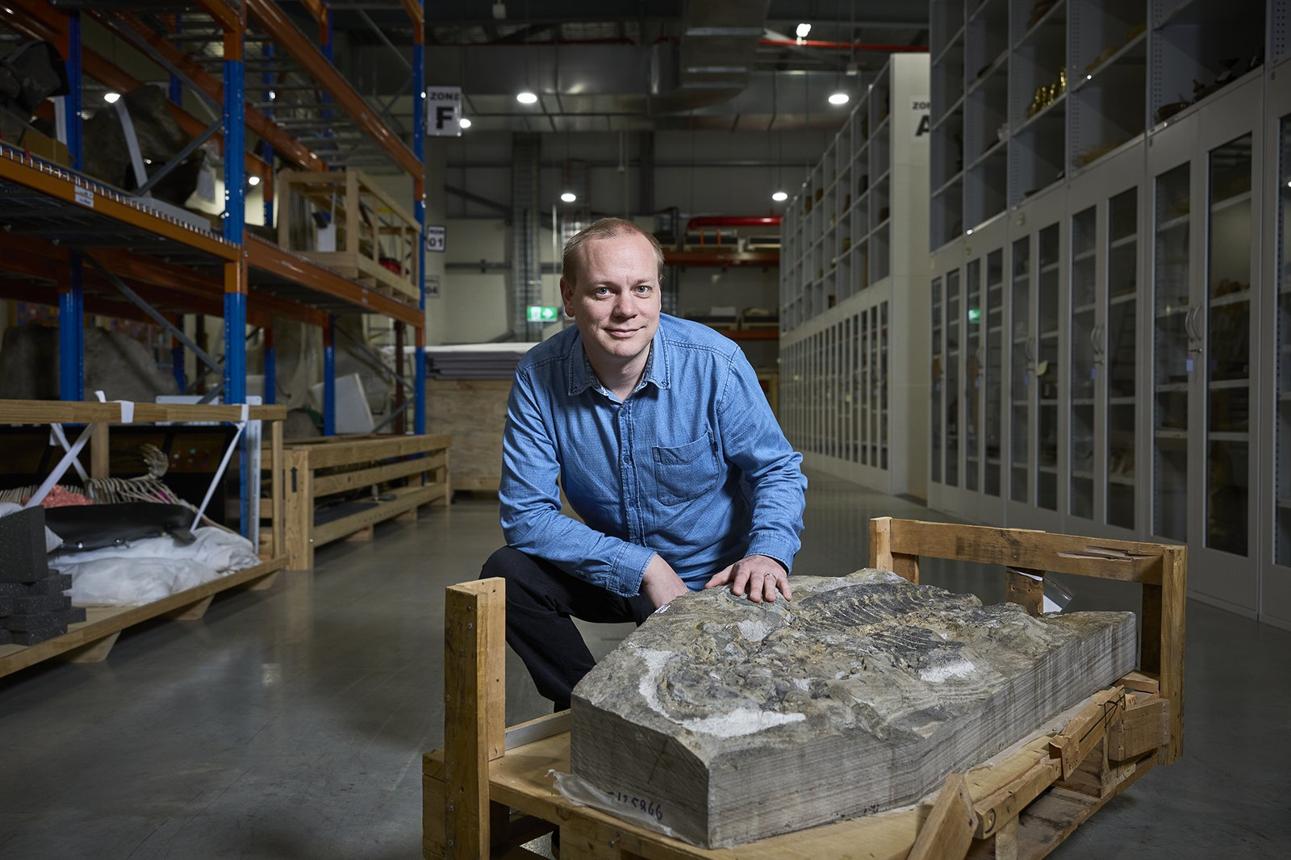
Man Finds 240-Million-Year-Old Fossil in Garden Wall — and Inspires a Boy Who Later Solves Its Mystery
Category: World News | Amazing Discoveries | History & Science
Published: 21 November 2026
By SprinkleNews.com
Imagine building a simple wall in your garden, only to discover that one of the stones contains the remains of a creature that lived approximately 240 million years ago.
It sounds almost unbelievable, but that is exactly how an extraordinary fossil discovery began in Australia.
What started as an ordinary landscaping project at a retired poultry farmer’s home eventually became one of the most important prehistoric discoveries in New South Wales.
And there is an even more remarkable twist to this story.
A 12-year-old boy who saw the fossil at a public exhibition later grew up to become a palaeontologist and helped identify the ancient creature.
The discovery has attracted renewed attention in November 2026, reminding people that important historical finds can sometimes emerge from the most unexpected places.
An Ordinary Garden Project Takes an Extraordinary Turn
The story began in October 1996 on the Central Coast of New South Wales, Australia.
A landscaper named David King was building a garden retaining wall at the home of retired poultry farmer Mihail Mihailidis.
The construction materials included stones obtained from Kincumber Quarry.
There was nothing particularly unusual about the project.
However, as King washed dirt from the newly placed stones, he noticed something remarkable emerging from beneath the surface.
Embedded in the rock were the fossilised remains of an ancient animal.
The discovery was far more significant than either man could initially have imagined.
The fossil belonged to a creature that had lived around 240 million years earlier, during the Triassic period.
To put that timescale into perspective, the animal existed long before modern humans and during a period when prehistoric life was undergoing enormous changes.
A piece of stone intended for a garden wall had preserved an extraordinary record of Earth’s distant past.
Experts Called in to Investigate
Realising the importance of the discovery, Mihailidis contacted the Australian Museum in early 1997.
Scientists examined the fossil and established that it belonged to an extinct group of amphibians called temnospondyls.
These ancient animals lived in prehistoric rivers and wetlands, and some resembled a combination of a giant salamander and a crocodile.
The fossil attracted public interest because it was unusually complete.
Unlike many prehistoric remains that consist of scattered bones or teeth, this specimen preserved much of the animal’s skeleton.
It also contained evidence of the outline of its skin.
Such preservation can provide scientists with valuable information about the appearance and physical characteristics of extinct creatures.
A 12-Year-Old Boy Sees the Fossil
The discovery was considered so interesting that it was temporarily included in the Dinosaur World Tour exhibition.
Among the visitors was a 12-year-old boy named Lachlan Hart.
Already fascinated by prehistoric life, the young visitor was captivated by the fossil.
At the time, he could not have known that his childhood interest would eventually become part of the discovery’s history.
Years passed, and Hart continued pursuing his interest in palaeontology, the scientific study of ancient life through fossils.
He eventually worked with the Australian Museum and the University of New South Wales.
Remarkably, he later had the opportunity to study the very fossil that had fascinated him as a child.
It is a wonderful example of how an early encounter with science can influence someone’s future career.
The Boy Becomes the Scientist
In 2000, Mihailidis donated the fossil to the Australian Museum.
The specimen was preserved in the museum’s collection, where researchers could study it in greater detail.
More than two decades after the original discovery, Hart became involved in the research that formally described the ancient animal.
In August 2023, scientists from the Australian Museum and UNSW Sydney announced that the fossil represented a previously unrecognised species.
They named it Arenaerpeton supinatus, meaning “supine sand creeper”.
The findings were published in the scientific Journal of Vertebrate Paleontology.
For Hart, the research represented something particularly meaningful.
The fossil that once inspired him as a schoolboy had become the subject of his own scientific work.
What Did This Ancient Creature Look Like?
According to researchers, Arenaerpeton supinatus measured approximately 1.2 metres from its head to the tip of its tail.
It was an amphibian that lived in freshwater rivers in what is now Australia’s Sydney Basin.
Scientists believe it was a predator that probably fed on ancient fish.
Although its head resembled that of a modern giant salamander, the prehistoric animal had a heavier body.
It also possessed sharp teeth, including two larger fang-like teeth on the roof of its mouth.
These characteristics suggest that it was well adapted to catching prey in its aquatic environment.
The fossil has helped researchers understand more about the diversity of amphibians living during the Triassic period.
Why Is the Fossil So Important?
Fossils are often incomplete because the remains of dead animals are usually broken down by natural processes.
Scavengers, water movement, decay and geological changes can destroy bones before they are preserved.
Even when fossils form, they may survive only as fragments.
The Australian specimen was particularly valuable because much of its skeleton remained connected.
More remarkably, scientists identified traces of the animal’s soft tissue outline.
This unusual preservation provides information that isolated bones alone might not reveal.
Researchers could use the fossil to better understand the creature’s body shape and relationship to other extinct amphibians.
The discovery also adds to knowledge of prehistoric ecosystems in Australia.
A Creature From a Very Different World
Approximately 240 million years ago, the world looked dramatically different from the one we recognise today.
The continents were arranged differently, and the plants and animals inhabiting Earth belonged to ecosystems that have long since disappeared.
The period is particularly important because it followed the greatest mass extinction known in Earth’s history.
Life was gradually recovering and diversifying.
Ancient amphibians, reptiles and other organisms occupied environments that would eventually change beyond recognition.
By examining fossils from this period, scientists can learn how animals adapted to changing conditions and how different groups evolved.
The Australian discovery provides another small but valuable piece of that enormous scientific puzzle.
Why Do Ordinary Discoveries Matter?
What makes this story so fascinating is not simply the age of the fossil.
It is the unusual sequence of events that brought it to scientific attention.
A farmer wanted a garden wall.
A landscaper noticed something unusual while cleaning stones.
A museum recognised the discovery’s significance.
A young boy saw the fossil at an exhibition.
Years later, that boy became a scientist who helped explain what the ancient creature had been.
Without the initial observation, the fossil might have remained unnoticed.
Without the decision to contact experts, its importance might never have been properly understood.
And without museums preserving such discoveries, future generations of researchers could lose valuable opportunities to study the past.
What Should You Do If You Discover Something Unusual?
The story also provides an important reminder about the value of protecting possible historical or scientific finds.
If someone discovers what appears to be a fossil or archaeological object, it is usually best not to damage, clean aggressively or remove it without appropriate guidance.
Photographs, location information and advice from local museums or relevant authorities can help specialists determine whether the object has scientific significance.
Rules governing fossil collection vary between countries and locations, particularly in protected areas.
Even objects that initially appear ordinary may contain information about earlier periods of Earth’s history.
A Childhood Interest That Came Full Circle
Perhaps the most memorable part of this story is the connection between the fossil and Lachlan Hart.
As a child, he admired a remarkable scientific discovery.
As an adult, he helped explain its identity and importance.
His experience illustrates how childhood curiosity can develop into professional achievement.
Museums, exhibitions and educational experiences can influence young people in ways that may not become apparent until many years later.
The story also shows how discoveries can connect people who might otherwise never have met.
A landscaper, a farmer, museum specialists and a young visitor all became part of the same remarkable history.
A Garden Wall With a Story Millions of Years Old
Nearly three decades after the fossil was first uncovered, its story continues to attract attention.
The discovery demonstrates that valuable evidence of prehistoric life does not always emerge from carefully planned scientific expeditions.
Sometimes it appears during ordinary activities, in places where nobody expected to find anything unusual.
The stone that was intended to form part of a garden wall became an important specimen in a museum collection.
And the boy who once stood admiring it eventually helped reveal its secrets.
It is a remarkable reminder that an ordinary moment of curiosity can sometimes lead to an extraordinary discovery — even one that connects us with life from 240 million years ago.
What Do You Think?
Imagine discovering a fossil millions of years old while carrying out work in your garden.
Would you immediately contact a museum, or would you initially assume it was just an unusual-looking stone?
Share your thoughts in the comments.

