The Tree That Legally Owns Itself
By sprinklenews.com
Imagine walking down a quiet street and discovering a tree that legally owns itself.
It sounds impossible, yet one of the world’s most unusual stories can be found in Athens, Georgia, USA, where a famous white oak has captured the imagination of visitors for generations.
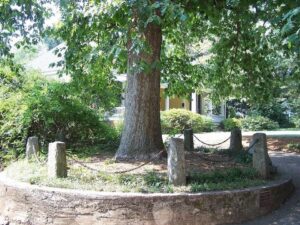
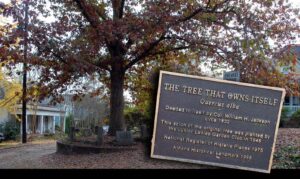
Known as “The Tree That Owns Itself,” this remarkable tree is said to have been granted ownership of itself and the land surrounding it by a local landowner in the early 1800s.
According to local legend, Colonel William H. Jackson loved the majestic oak so much that he signed a document giving the tree legal ownership of itself and the eight feet of land around its base.
Whether the original document ever existed remains a subject of debate among historians. However, the story became so popular that the community embraced it and treated the tree as if it truly possessed those rights.
Over the years, the tree became one of the most beloved landmarks in Athens.
Visitors traveled from across the country to see the famous oak and learn about its unusual claim to independence.
In 1942, the original tree fell during a storm.
Many thought the story would end there.
Instead, local residents planted a new tree grown from one of the original tree’s acorns in the exact same location.
The replacement became known as the “Son of the Tree That Owns Itself.”
Today, it continues to stand proudly, carrying on the legend and serving as a symbol of community pride and environmental stewardship.
The story raises fascinating questions.
Can a tree really own property?
Legally, the answer is complicated.
Most legal systems do not recognize trees as property owners in the same way humans can own land.
Yet the people of Athens chose to honor the spirit of the gift regardless of legal technicalities.
For many residents, protecting the tree is about more than ownership.
It represents a commitment to preserving history, nature, and local traditions.
Why People Love This Story
The Tree That Owns Itself combines history, mystery, and a touch of whimsy.
It challenges our assumptions about ownership while reminding us of the special connections people can form with nature.
In a world where land is constantly bought and sold, the idea of a tree owning itself feels both surprising and inspiring.
Conclusion
Whether viewed as a legal curiosity, a local legend, or a symbol of conservation, the Tree That Owns Itself remains one of the world’s most unusual landmarks.
More than a century after the story began, it continues to inspire visitors and remind us that some of the most extraordinary stories are rooted in the ground beneath our feet.
Frequently Asked Questions
Is the tree real?
Yes. The tree and its successor both existed in Athens, Georgia.
Does the tree legally own itself?
The legal status is debated, but the community continues to honor the tradition.
Can visitors see it today?
Yes. The Son of the Tree That Owns Itself still stands in Athens, Georgia.
Why is the story famous?
Because it is one of the world’s most unusual stories involving nature and property rights.