


There is a particular kind of silence that only exists in the early hours of a city—not the absence of sound, but the absence of demand.
Amsterdam, known for its steady rhythm of bicycles and soft conversations, reveals a different version of itself in the morning. Before the cafés fill, before the narrow streets begin to echo with movement, there is a pause. Not an empty pause, but a gentle one.
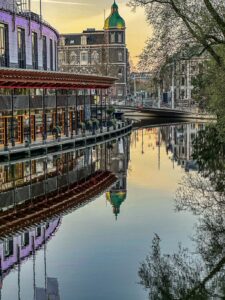
I stepped out just after sunrise, when the light was still undecided—hovering somewhere between grey and gold. The canals were unusually still, holding reflections so clear they felt almost deliberate, as if the city had been carefully arranged overnight.
A single bicycle passed, its sound sharp against the quiet. No rush, no urgency. Just motion.
It struck me how different this felt from the idea most people carry about cities. Cities are supposed to be loud, crowded, demanding. But here, in this moment, Amsterdam felt almost private—like a place that belonged only to those willing to wake up early enough to see it this way.
As the morning unfolded, more people began to appear—but nothing about it felt rushed.
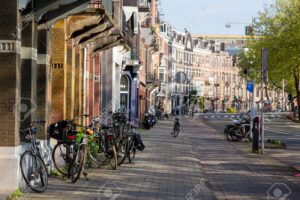
Cyclists moved steadily, not weaving aggressively, not competing for space. There was an unspoken agreement in the way people navigated the streets. Everyone seemed to understand the rhythm, and more importantly, to respect it.
A man paused his bicycle near the canal, not to check his phone or adjust his bag, but simply to look. He stood there for a moment, hands resting lightly on the handlebars, as if the act of stopping required no explanation.
In many places, stillness feels like inefficiency. Here, it felt natural.
That quiet acceptance of slowness is not accidental. It’s part of a broader way of living—one that doesn’t constantly push against time, but moves alongside it.
I eventually stepped into a small café tucked along a side street. It wasn’t trying to attract attention. No loud signage, no crowd spilling onto the pavement. Just a warm light inside and the faint smell of coffee.
The barista greeted me with a nod rather than a rehearsed welcome. It felt more genuine that way.
As I waited, another customer—an older woman—stood beside me. We didn’t speak at first. There was no pressure to fill the silence. But when our coffees arrived at nearly the same moment, she smiled and said, “It’s the best time of day, isn’t it?”
It wasn’t a dramatic conversation. Just a brief exchange.
But it carried something subtle—a shared recognition of the moment we were both experiencing.
That’s what made it memorable.

