

Walking Without Direction
There are places that impress you immediately, and then there are places that take their time.
At first glance, it feels almost too perfect—canals that mirror the sky with careful precision, narrow cobbled streets that seem arranged rather than built, and buildings that carry their age with quiet confidence. It’s the kind of place people photograph endlessly, as if trying to confirm that it’s real.
But the longer you stay, the less it feels like a destination—and the more it begins to feel like a pause.
I arrived without much of a plan. No checklist, no urgency to “see everything.” Just a vague intention to walk.
And in Bruges, that turns out to be enough.
There’s something unusual about walking through a place where nothing seems to demand your attention.
In many cities, your focus is constantly pulled—traffic, noise, crowds, movement. But here, the streets seemed to offer space rather than compete for it.
I turned corners without thinking, letting the layout guide me instead of a map. A bicycle leaned against a wall, untouched. A window sat slightly open above a quiet street. Somewhere in the distance, a bell rang—not loudly, just enough to mark the passing of time.
It didn’t feel empty. It felt complete.
That distinction matters.
A Small Moment by the Canal
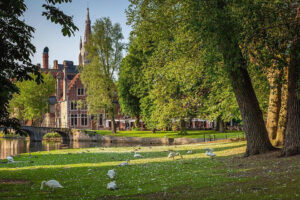
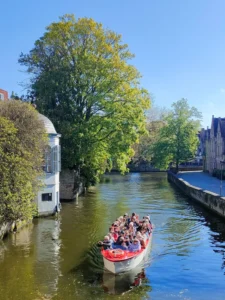
I eventually stopped by a canal where the water moved so slowly it was almost still.
A man sat on a bench nearby, feeding small pieces of bread to a pair of swans drifting close to the edge. There was no performance in it—no attempt to attract attention. Just a quiet, repeated gesture.
After a while, he noticed me watching and gave a small nod, the kind that acknowledges presence without inviting conversation.
It felt appropriate.
We shared the space without needing to define it.
Moments like that are easy to overlook because they don’t announce themselves. But they carry a kind of weight—subtle, steady, and difficult to replicate.
Inside a Small Chocolate Shop
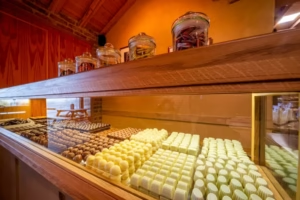

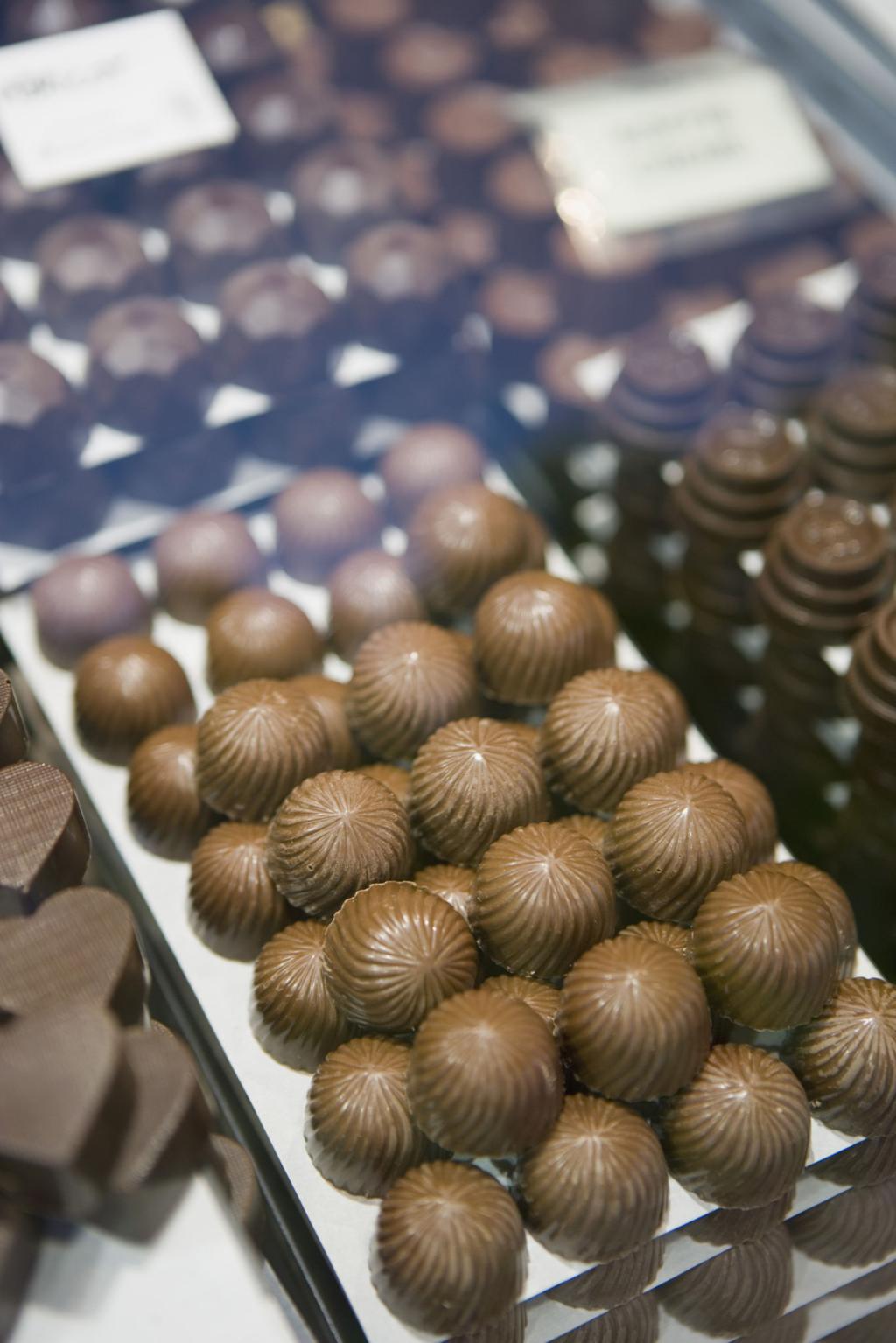
Later, almost by accident, I stepped into a small chocolate shop tucked between two narrow buildings.
It was quiet inside, the kind of quiet that feels intentional rather than empty. Rows of carefully arranged chocolates sat behind glass, each one slightly different, as if individuality mattered more than uniformity.
The person behind the counter didn’t rush to greet me. Instead, there was a pause—just enough to let me take in the space.
When we did speak, it was simple.
“Take your time,” they said.
And for once, that didn’t feel like a polite phrase. It felt like an actual invitation.
I chose something without overthinking it. The transaction was brief, but the atmosphere lingered. It wasn’t just about buying something—it was about being allowed to move at a slower pace, even for a few minutes.
As the afternoon shifted toward evening, the light softened, and the city seemed to settle even further into itself.
There was no dramatic transition—no sudden energy or noise. Just a gradual deepening of the same calm that had been there all along.
That’s what makes Bruges different.
It doesn’t try to impress you with movement. It stays still—and allows you to notice what’s already there.
In a world that constantly encourages speed, that kind of stillness can feel unfamiliar at first. But once you adjust to it, it becomes something else entirely.
Not slow.
Just… unhurried.
What Stayed With Me
When I left, I realised I hadn’t “done” very much.
No long itinerary. No major attractions checked off. No packed schedule.
And yet, the day felt full.
That’s the quiet charm of Bruges—and perhaps of Belgium more broadly. It doesn’t rely on spectacle. It offers something less obvious, but more lasting: a different relationship with time.
A reminder that not everything needs to be rushed, documented, or turned into an event.
Some places don’t ask for your attention.
They simply hold it.


