

A major scientific breakthrough has reshaped historians’ understanding of Ancient Egypt’s most powerful era, suggesting the rise of the New Kingdom began later than previously believed.
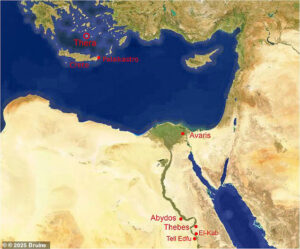
The New Kingdom—Egypt’s age of empire, wealth and iconic rulers such as Tutankhamun—has long been dated to around 1550 BCE, beginning with the reign of Pharaoh Ahmose I. However, new radiocarbon dating evidence indicates that a key historical marker, the massive Santorini (Thera) volcanic eruption, occurred before Ahmose came to power.
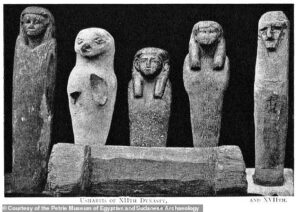
Researchers analysed artifacts directly linked to Egypt’s late 17th and early 18th Dynasties, including a mudbrick stamped with Ahmose’s royal seal, a linen burial cloth and wooden funerary figures known as shabtis. Because these objects are securely tied to specific rulers and temples, their dates provide a reliable anchor for the historical timeline.
The findings show that the Thera eruption took place during Egypt’s Second Intermediate Period—earlier than scholars had assumed—rather than overlapping with the early New Kingdom. This challenges decades of historical interpretation that used the eruption as a benchmark for dating Egypt’s reunification and imperial expansion.
Scientists say the revised timeline supports the so-called “low chronology” model, placing the start of the 18th Dynasty slightly later than traditional estimates. While the adjustment is measured in decades rather than centuries, experts stress it has wide-ranging implications for understanding trade, cultural exchange and political change across Egypt and the eastern Mediterranean.
As lead author Hendrik J. Bruins explained, the research shows the Second Intermediate Period lasted longer than once thought, delaying the dawn of Egypt’s New Kingdom—an era that would go on to define ancient civilisation at its height.
Source
Daily Mail — Story by Stacy Liberatore (published 2 hours ago)


