

The Places We Almost Ignore: Why Ordinary Streets Become Part of Our Travel Memories
When people talk about travelling, the conversation usually begins with the big attractions.
Paris has the Eiffel Tower. London has Big Ben. Amsterdam has its canals. Toronto has the CN Tower. Rotterdam has its striking modern architecture.
These are the places that appear on postcards, travel websites and carefully planned itineraries. They are often the reason we choose a destination in the first place.
Yet when a journey is over and the photographs have been stored away, something interesting happens. The memories that stay with us are not always connected to the famous places.
Sometimes, it is an ordinary street.
A bakery we passed every morning.
A quiet bench beside a canal.
The sound of bicycles moving past us.
A small shop where we stopped because it suddenly started raining.
A conversation with someone whose name we never even learned.
Travel has a strange way of turning ordinary moments into memories.
The Street That Wasn’t on the Itinerary
Most travellers make plans.
We search for attractions, museums, restaurants and interesting places before arriving. We check opening times, transport connections and reviews. Sometimes every hour of a trip seems to have somewhere attached to it.
But cities don’t exist only through their attractions.
Between the railway station and the museum are streets where people are simply living their lives. Someone is taking a child to school. A shopkeeper is arranging products outside a store. A cyclist is rushing to work. Someone else is sitting beside a window drinking coffee.
None of these moments would normally appear in a travel guide.
Yet they allow us to see something that an attraction sometimes cannot show us: what a place feels like when nobody is performing for visitors.
That can be one of the most interesting parts of travelling.
Ordinary Becomes Interesting When We Are Somewhere New
Think about something as simple as going to a supermarket.
At home, it is a chore.
You walk in, find what you need, pay and leave.
Do exactly the same thing in another country and suddenly everything becomes interesting.
The packaging looks different. There are foods you have never seen before. Familiar products have unfamiliar names. The bread section might be enormous. Customers may pack their groceries differently. Even something as small as whether people queue patiently or hurry toward the next available checkout becomes noticeable.
Nothing extraordinary has happened.
You have simply entered a supermarket.
But because the surroundings are unfamiliar, you begin paying attention.
Perhaps this is one of travel’s quiet gifts: it makes us observant again.
A City Is More Than Its Landmarks
There is nothing wrong with visiting famous attractions. Many deserve their reputation.
Museums preserve extraordinary stories. Historic buildings connect us with earlier generations. Monuments help us understand events that shaped a place.
But seeing only the landmarks can sometimes give us an incomplete picture.
Imagine visiting Amsterdam and remembering only the major attractions but never noticing the rows of bicycles outside a station.
Imagine travelling through Portugal without paying attention to the tiled buildings, neighbourhood cafés and people talking outside small shops.
Imagine visiting a British town without wandering beyond its main shopping street and discovering the canals, old buildings, parks or residential streets nearby.
These details might appear insignificant while we are there.
Later, they can become the things that distinguish one journey from another.
The Photographs We Didn’t Plan to Take
Modern travel has become closely connected with photography.
We know exactly where people stand to photograph certain landmarks. Sometimes there is practically an unofficial queue for the same photograph from the same angle.
Then there are the photographs we take without planning them.
A colourful doorway.
Laundry hanging between buildings.
An unusual bicycle.
A reflection on the water.
A street musician.
A beautiful cloud over an otherwise ordinary building.
Perhaps these photographs matter because they are not telling us what we were supposed to notice.
They show what actually caught our attention.
Two people can visit the same city on the same day and return with completely different collections of photographs. One notices architecture. Another notices people. Someone photographs food. Someone else becomes fascinated by doors, boats, street art or flowers.
The destination may be the same.
The experience never is.
Getting Slightly Lost Can Change a Journey
Not seriously lost, of course.
There is a considerable difference between being pleasantly unsure which street leads back to the station and standing somewhere unfamiliar at midnight with no idea where you are.
But the harmless kind of getting lost can produce wonderful discoveries.
You take the wrong turning.
You realise your mistake.
And then you notice something you would never have seen otherwise.
Before smartphones became our constant travel companions, getting lost was almost part of travelling. Today, a blue dot can guide us from one attraction to another with impressive accuracy.
That convenience is valuable, particularly when travelling somewhere unfamiliar.
But occasionally, when it is safe to do so, putting the phone away and simply looking around can reveal another version of a place.
Not everything interesting has a pin on a map.
People Often Become Part of the Destination
Buildings may dominate travel photographs, but people frequently dominate travel memories.
A stranger who helped when we couldn’t understand a ticket machine.
A waiter who patiently explained a menu.
Someone who pointed us toward the correct platform.
A hotel receptionist who remembered our name.
A passenger who started an unexpected conversation.
These interactions can last only a few minutes.
Years later, we may still remember them.
That tells us something important about travel. We don’t experience destinations only through architecture, landscapes and attractions.
We experience them through people.
A beautiful city can leave a disappointing impression after an unpleasant encounter. An otherwise ordinary place can become special because someone showed unexpected kindness.
Sometimes the Journey Becomes the Story
We often treat transportation as the boring part between two interesting places.
But trains, buses, ferries and walks have their own stories.
Look through the window of a train crossing a country and you see things that rarely make it into tourism campaigns: back gardens, warehouses, farms, small stations, graffiti-covered walls, industrial areas and towns whose names you may never hear again.
They aren’t necessarily beautiful.
They are real.
Travel doesn’t have to present a perfect picture every minute.
Sometimes watching the landscape change outside a window gives us a better sense of a country than rushing from one famous attraction to another.
The Memory Often Arrives Later
One of the strangest things about travel is that we don’t always recognise an important moment while it is happening.
A morning walk might feel completely ordinary.
Months later, a photograph brings it back.
Suddenly you remember the temperature, the street, the sound around you and perhaps even what you were thinking about that morning.
The moment has acquired value with time.
That is why the best travel experiences cannot always be ranked by how spectacular they looked.
Some memories whisper rather than shout.
Perhaps We Should Travel a Little More Slowly
There is understandable pressure to see as much as possible when visiting somewhere new, particularly when time and money are limited.
If you have travelled hundreds or thousands of kilometres, naturally you want to make the most of the opportunity.
But making the most of a journey doesn’t necessarily mean filling every available hour.
Sometimes it means sitting down.
Watching.
Walking without constantly checking the next destination.
Entering the little shop.
Taking the slower route back.
Looking at the buildings between the attractions.
Allowing a place enough time to become more than a collection of photographs.
Because years later, you may struggle to remember everything you saw inside a famous attraction.
Yet somehow you will remember that little street around the corner.
And perhaps that is one of the loveliest things about travelling.
We leave home searching for remarkable places, only to discover that ordinary moments can become remarkable simply because we were there to notice them.
Category: Travel
Suggested excerpt:
The biggest attractions may bring us to a destination, but they aren’t always what we remember. Sometimes an ordinary street, a short conversation or an unplanned walk becomes the strongest memory of a journey.
Meta description:
Why do ordinary streets and unexpected moments become some of our strongest travel memories? A reflection on slowing down and noticing the places between the landmarks.
Suggested tags: Travel Memories, Slow Travel, Travel Experiences, City Exploration, Meaningful Travel, Sprinkle News
Featured-image direction:
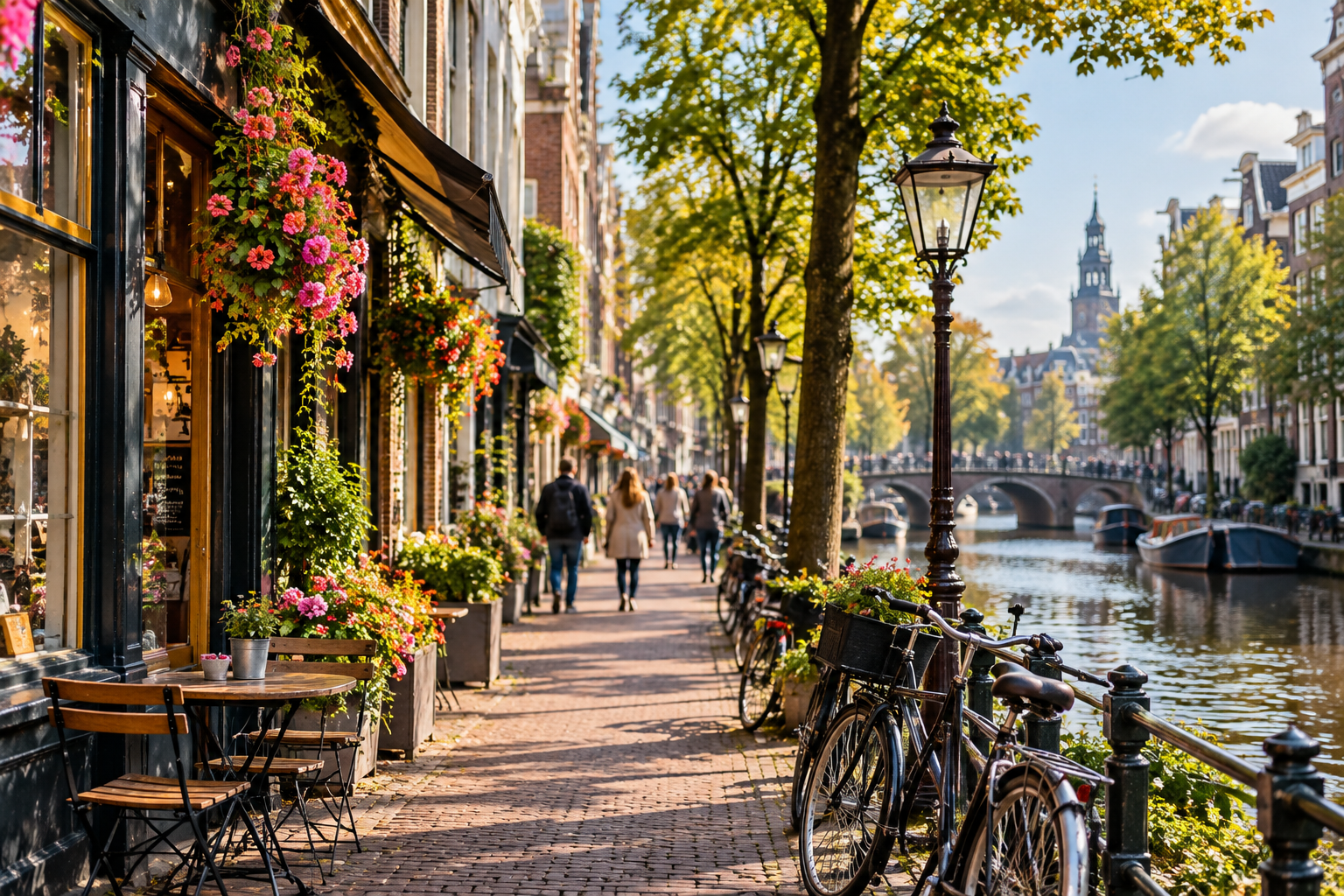
Use an authentic-looking European street or canal scene with people walking naturally in the distance — not a famous landmark and not an overly polished stock-style image. The photograph should reinforce the central idea that an ordinary street can hold a memorable travel story.


