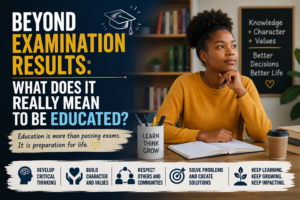
Why Practical Skills Should Be Taught Alongside Academic Subjects
For generations, formal education has focused mainly on academic subjects. Students spend years studying mathematics, science, languages, history, geography, and other important areas of knowledge.
These subjects help learners develop intellectual ability and prepare for further education. However, academic knowledge alone may not prepare young people for all the responsibilities they will face outside the classroom.
Many students can solve difficult examination questions but feel unprepared when asked to prepare a budget, write a professional email, attend an interview, understand a contract, cook a basic meal, or respond to an emergency.
This is why practical life skills should not be treated as optional activities. They should form an important part of education.
What Are Practical Skills?
Practical skills are abilities that people use to manage everyday responsibilities and respond effectively to real-life situations.
They may include:
Financial management
Communication and public speaking
Digital safety
Time management
Basic cooking and household care
First aid
Problem-solving
Teamwork
Career preparation
Entrepreneurship
Conflict resolution
Environmental responsibility
These skills do not replace academic subjects. Instead, they help students apply knowledge in meaningful ways.
For example, mathematics becomes more relevant when students use it to calculate household expenses, compare prices, understand interest, or plan a small business. Language lessons become more useful when students practise writing applications, reports, emails, and formal letters.
Financial Literacy
Young people are increasingly exposed to advertising, online shopping, mobile payments, credit offers, and financial scams. Without financial education, they may find it difficult to distinguish between a need and a want or understand the long-term consequences of borrowing money.
Financial literacy can teach students how to prepare a budget, save regularly, compare financial products, avoid unnecessary debt, and recognise fraudulent offers.
Students should also learn that financial success is not simply about earning a high income. It involves planning, discipline, responsible spending, and preparing for unexpected situations.
A basic financial education can protect young adults from mistakes that may take many years to correct.
Communication Skills
The ability to communicate clearly is valuable in almost every profession. Employers want people who can listen, explain ideas, ask relevant questions, participate in meetings, and work with different personalities.
Students may perform well academically but struggle to express themselves during interviews or presentations. Some are afraid to speak because they fear making mistakes or being laughed at.
Schools can help by creating regular opportunities for discussions, debates, presentations, group projects, and reflective writing.
Communication education should also include listening. Good communication is not only about speaking confidently. It is also about understanding other people and responding respectfully.
Digital Literacy and Online Safety
Technology has created many educational and professional opportunities. Students can access learning materials, communicate across borders, develop digital skills, and participate in online courses.
However, the internet also contains misinformation, scams, cyberbullying, harmful content, and threats to personal privacy.
Digital literacy should teach students how to evaluate online information, protect passwords, recognise suspicious messages, communicate responsibly, and understand that online actions can have long-term consequences.
Students should learn not to accept every viral post as true. They should ask who created the information, whether reliable evidence is provided, and whether other trustworthy sources confirm the claim.
Digital literacy is now as important as traditional reading and writing.
Career Preparation
Some students complete school without understanding how workplaces operate. They may not know how to prepare a curriculum vitae, write an application, dress appropriately for an interview, communicate with a supervisor, or manage professional responsibilities.
Career education can introduce students to different professions and help them understand the skills required for various industries.
Schools can invite professionals, entrepreneurs, technicians, artists, farmers, healthcare workers, and former students to speak about their work. Visits to workplaces can also help students connect classroom learning with real careers.
Career guidance should not pressure every student to follow the same path. It should help learners identify their interests, abilities, values, and realistic opportunities.
Entrepreneurship and Creativity
Not every student will enter formal employment immediately after school. Some may create their own opportunities through small businesses, skilled trades, agriculture, technology, creative work, or community services.
Entrepreneurship education can teach students how to identify a need, develop an idea, calculate costs, understand customers, promote a service, and manage income responsibly.
It should also teach students that entrepreneurship involves risk, patience, learning, and persistence. It is not simply a promise of quick wealth.
School projects can allow students to develop small business ideas, design products, organise events, or solve community problems. These activities build confidence and encourage creativity.
Basic Health and First Aid
Students should understand how to care for their physical and emotional well-being. Health education can cover nutrition, hygiene, exercise, rest, stress management, and when to seek professional help.
Basic first-aid knowledge can also save lives. Students can learn how to respond to minor injuries, burns, choking, fainting, and other emergencies while waiting for qualified assistance.
Such lessons should be practical and age-appropriate. They should be taught by trained professionals whenever specialised knowledge is required.
Household and Independent-Living Skills
There is sometimes an assumption that young people will automatically learn household responsibilities at home. However, this is not always the case.
Students can benefit from learning how to prepare simple nutritious meals, clean safely, care for clothing, organise important documents, plan weekly responsibilities, and use household equipment correctly.
These skills are not limited to one gender. Every young person should be prepared to care for themselves and contribute fairly to a household.
Independence does not begin when someone moves away from home. It begins when they learn to take responsibility for daily tasks.
Teamwork and Conflict Resolution
Most workplaces require people to cooperate with others. Yet teamwork can be challenging when individuals have different personalities, experiences, and opinions.
Group activities in schools can help students learn how to share responsibilities, manage disagreements, respect deadlines, and support team members.
However, simply placing students in groups is not enough. Teachers should help them understand how effective teamwork works.
Students should learn that disagreement does not always mean disrespect. People can hold different opinions while still listening to one another and working towards a shared goal.
Respecting Vocational and Technical Education
Practical education should also include greater respect for vocational and technical careers.
Societies depend on mechanics, plumbers, electricians, builders, farmers, chefs, fashion professionals, computer technicians, healthcare assistants, and many other skilled workers.
These professions should not be presented as choices only for students who do not perform well academically. They require intelligence, discipline, creativity, and specialised training.
Schools should help students understand that success can take different forms. A university degree is valuable, but it is not the only respectable path.
Challenges to Introducing Practical Education
Adding practical skills to school programmes may require more teachers, training, facilities, and teaching materials. Some schools already struggle with limited resources and crowded timetables.
There may also be disagreement about which practical skills should receive the greatest attention.
These challenges are real, but they should not prevent progress. Schools can begin with simple activities that use existing resources. Local professionals and community organisations may also support workshops, mentoring, and demonstrations.
Practical education does not always require expensive equipment. A classroom discussion about budgeting, a practice interview, or a student-led project can provide valuable learning.
Conclusion
Academic subjects remain essential. Students need strong foundations in mathematics, science, language, history, and other areas.
However, education should also prepare them to manage money, communicate professionally, use technology responsibly, care for themselves, work with others, and respond to real-life challenges.
Practical skills do not reduce the value of academic education. They strengthen it.
A student should leave school not only with examination results but also with the confidence and ability to manage responsibilities, make informed decisions, and contribute productively to society.
When schools connect knowledge with everyday life, education becomes more relevant, inclusive, and meaningful.