After the Rain: The Human Stories Behind Ghana’s Latest Flood Disaster
Introduction
Rain is usually welcomed in many communities.
It cools the air, nourishes the soil and brings relief after days of heat. But sometimes, rain does not arrive gently. Sometimes it falls with such force that streets become rivers, homes become unsafe and ordinary families suddenly find themselves fighting for survival.
That is the painful reality facing parts of Ghana after torrential rains caused severe flooding in Accra, Tema and surrounding areas.
According to reports, at least 12 people have died after heavy rainfall flooded large parts of Ghana, with rescue operations still ongoing. Emergency services have rescued hundreds of people, while authorities continue to assess the full scale of the damage.
Behind every number is a family.
Behind every flooded street is a home, a business, a school route or a community that may take weeks or months to recover.
A Disaster That Feels Too Familiar
For many Ghanaians, flooding is sadly not a new story.
Each rainy season brings worry to communities in low-lying areas. When dark clouds gather, some families do not only think about umbrellas and wet clothes. They think about drains overflowing, roads becoming impassable, electricity risks, destroyed property and the safety of children and elderly relatives.
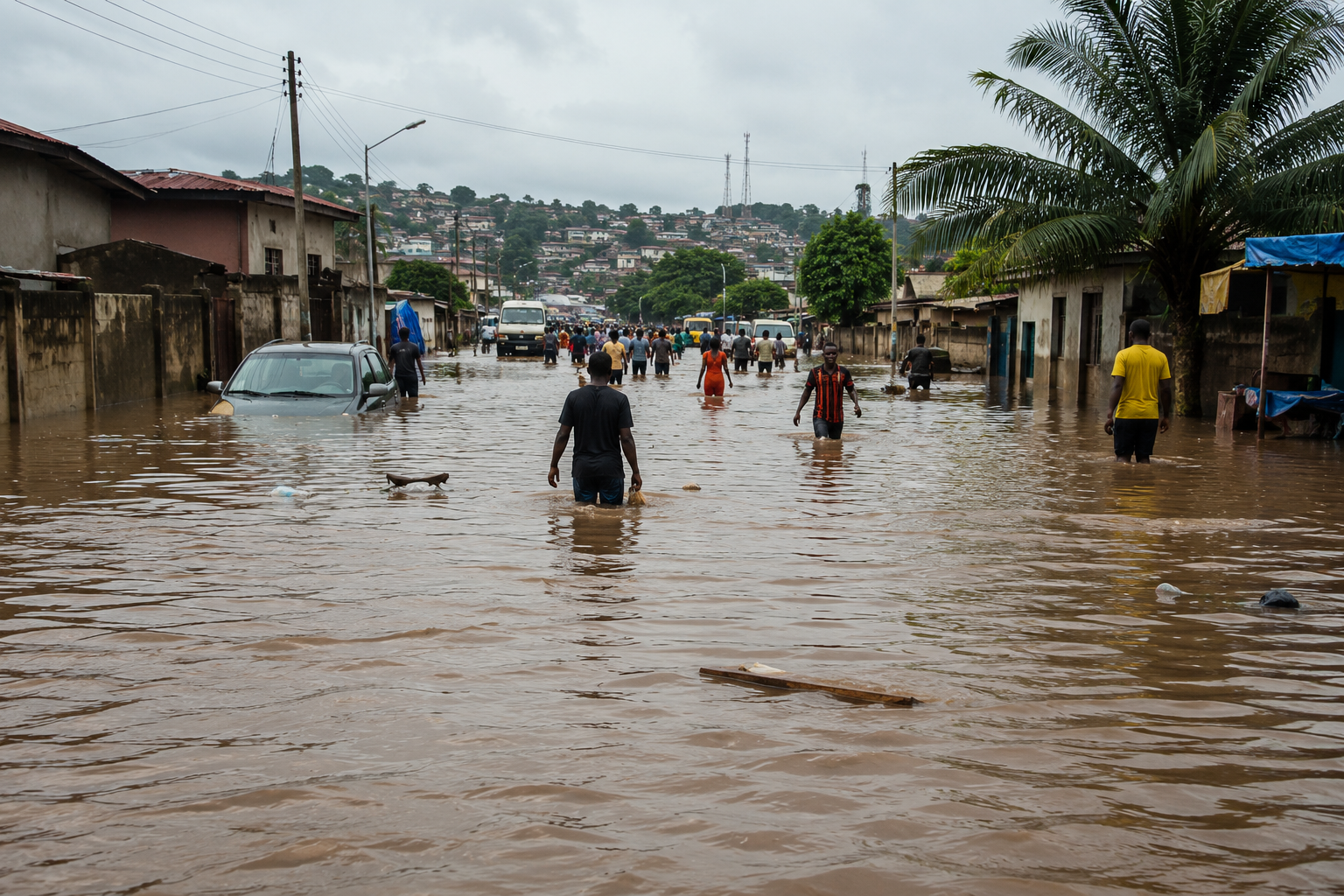
In the latest flooding, videos and reports showed people wading through deep water, residents stranded in flooded areas and emergency workers trying to reach those in danger. Some roads and buildings were submerged, making rescue work difficult.
It is heartbreaking because floods do not only destroy things; they interrupt life.
A trader may lose stock bought with hard-earned savings.
A student may lose books and uniforms.
A family may lose furniture, documents or a place to sleep.
Worst of all, some families lose loved ones.
When Rescue Becomes a Race Against Time
Floods move quickly.
One moment, water is rising at the edge of a road. The next, it has entered homes, covered vehicles and trapped people indoors.
Emergency services in Ghana have been working to rescue affected residents. Reports say more than 400 people have been rescued, while rescue and recovery operations continue.
These rescue efforts remind us of the courage of firefighters, disaster response teams, neighbours, volunteers and ordinary citizens who step forward during moments of danger.
In many African communities, help often begins before official support arrives.
A neighbour shouts for help.
Someone brings a rope.
Young men assist elderly residents.
Families open their homes to those displaced.
People share food, clothing and shelter.
During disasters, the strength of community often becomes visible.
The Pain of Losing Loved Ones
The most devastating part of any flood disaster is the loss of life.
Reports from Ghana confirm deaths, including women, men and at least one child.
No article can fully capture the grief of families who are now mourning.
For them, this is not simply a national emergency or a weather event. It is personal. It is the empty chair at home, the unanswered phone call, the funeral arrangements that should never have happened and the painful question of whether more could have been done to prevent the tragedy.
That is why floods must never be treated as ordinary seasonal inconvenience.
When people die, the conversation must move beyond sympathy.
It must become a serious national reflection.
Why Do Floods Keep Happening?
Flooding can be caused by intense rainfall, but rain alone does not tell the full story.
Urban flooding is often worsened by blocked drains, poor waste disposal, building on waterways, inadequate drainage systems, rapid urban growth and weak enforcement of planning regulations.
In cities such as Accra, water needs clear channels to flow safely. When drains are blocked or natural waterways are reduced by construction, floodwater has nowhere to go. It spreads into roads, homes and businesses.
This is why flood prevention cannot wait until the rains begin.
It requires year-round planning.
Drainage systems must be maintained.
Waste management must improve.
Building regulations must be enforced.
Flood-prone communities must receive better protection.
Residents must also be educated about the dangers of crossing flooded roads or staying in unsafe buildings.
Climate, Cities and Human Vulnerability
Across the world, extreme weather events are placing pressure on communities.
In some countries, heatwaves are closing schools. In others, heavy rains are destroying homes. Ghana’s latest flooding is part of a wider global reality in which weather is increasingly disrupting everyday life.
The Associated Press reported that Ghana’s meteorological agency warned residents to prepare for more rain in Accra, while noting that African regions remain highly vulnerable to extreme weather despite contributing a small share of global greenhouse gas emissions.
This does not mean every flood should be explained by climate change alone. Local planning, drainage, waste management and urban development matter greatly.
But it does mean countries must prepare for more frequent and more intense weather shocks.
Preparedness is no longer optional.
It is a matter of public safety.
The Human Cost Is More Than Property Damage
When floods are reported, the focus often falls on numbers:
How many died?
How many rescued?
How many homes affected?
How many roads closed?
Those numbers matter.
But they do not fully explain what families experience after floodwaters recede.
There is the smell of soaked furniture.
The fear of disease.
The loss of school materials.
The cost of replacing household items.
The stress of finding temporary shelter.
The emotional trauma of watching water destroy what took years to build.
For low-income families, recovery can be especially difficult. A mattress, a refrigerator, school uniforms or a small shop’s stock may represent years of sacrifice.
When such things are lost, it is not simply inconvenience.
It is financial shock.
When Floods Cut Off More Than Roads
The impact of the floods has gone beyond submerged streets and damaged property.
In some affected areas, residents have also reported interruptions to electricity, phone networks and internet services. One resident said there had been no electricity since the previous day, making it even harder for families to communicate, charge phones, follow emergency updates or contact relatives.
When disasters happen, communication becomes a lifeline.
People need to know whether loved ones are safe. Emergency workers need clear information. Families need updates about roads, shelters, power restoration and further rainfall warnings.
When electricity and communication services are disrupted, fear grows quickly. A flooded home is frightening enough. But being unable to reach family members or receive reliable updates makes the situation even more distressing.
This is why disaster response must include not only rescue operations, but also the urgent restoration of power, phone networks and internet access wherever possible. In moments of crisis, information can save lives.
Ghana’s Resilience Must Be Matched With Action
Ghanaians are known for resilience.
After disasters, people clean, rebuild and support one another. But resilience should not become an excuse for repeated suffering.
A nation should not only praise people for surviving floods. It must also ask why they are forced to survive the same danger again and again.
This tragedy should renew serious attention on:
- Better drainage infrastructure.
- Stronger city planning.
- Regular desilting of drains.
- Public education on flood safety.
- Protection of waterways.
- Rapid emergency response systems.
- Support for displaced families.
- Accountability for preventable risks.
Flood prevention is not only the responsibility of government. Citizens, businesses, landlords, developers and communities all have a role to play.
But leadership matters.
Planning matters.
Enforcement matters.
Lives depend on it.
Remembering Those Affected
At this moment, the most important thing is compassion.
Families are grieving.
Some people are cleaning damaged homes.
Some may not know where they will sleep.
Others are waiting for news of missing relatives or assessing the loss of property.
They need more than headlines.
They need support, dignity and practical help.
Food.
Clean water.
Clothing.
Shelter.
Medical care.
Emotional support.
Safe roads.
Accurate information.
The rest of the country and the wider Ghanaian diaspora should not look away simply because flooding has happened before.
Every disaster is new to the family experiencing it.
Conclusion
Ghana’s latest floods are a painful reminder that rain can become a disaster when communities are not fully protected.
The deaths reported are not just statistics. They represent human beings whose lives mattered. The homes flooded are not just buildings. They are places where families cooked, slept, prayed, studied and planned their futures.
After the rain, the water may eventually go down.
But the questions remain.
How can communities be better protected?
How can cities grow without placing people in danger?
How can emergency response improve?
How can Ghana move from reacting to floods to preventing the worst of them?
This is not only a story about disaster.
It is a story about responsibility.
It is a story about community.
It is a story about remembering that behind every flooded street are people whose lives deserve safety, dignity and hope.
Meta Description
Heavy rains have caused deadly flooding in Ghana, affecting Accra, Tema and surrounding areas. This article looks beyond the statistics to the human stories, rescue efforts and urgent need for long-term flood prevention.